Problem-Solving
Why Precision Rigging and Crane Work Are Essential for Narrow Urban Trenton Yards
By Master Tree RemovalMarch 11, 20266 min read
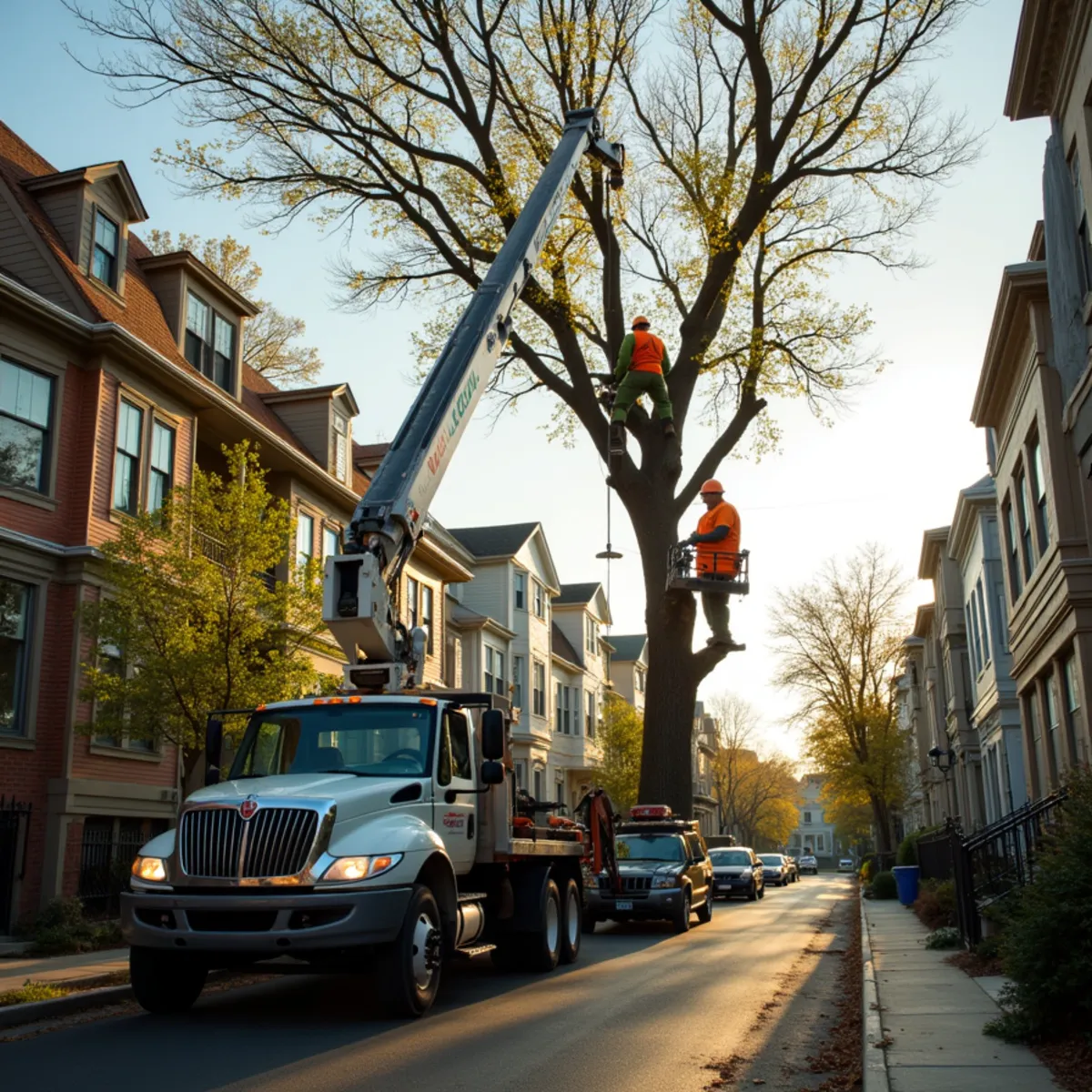
On an open lot, a skilled crew can fell a tree in one clean direction. On a narrow Trenton rowhome lot, there is no such luxury — the tree is boxed in by the house, the neighbor’s house, a fence, and overhead wires, often with only a few feet to spare. That is where precision rigging and crane work earn their keep.
A crane changes both the safety math and the price, so this pairs naturally with how central-NJ removal costs are built and with the toughest version of the job — getting a tree off a house.
The Problem With Tight Lots
Historic blocks along Garfield Avenue and Greenwood Avenue in Trenton rarely allow a bucket truck or crane to sit beside the tree at all. Drop the wrong limb and it lands on a roof, a car, or the sidewalk. The tree cannot simply be cut down; it has to be taken apart, piece by controlled piece.
How Rigging Works
In a rigging removal, a climber ascends the tree and sets ropes and pulleys so each limb and trunk section can be cut and then lowered under control rather than dropped. A ground crew manages the ropes, easing each piece down into whatever small clear space exists. It is slow, deliberate, and precise — the opposite of a quick fell — and it protects everything within feet of the tree.
When a Crane Is Better
For very large, decayed, or truly trapped trees, a crane changes the math. Instead of rigging heavy wood down past a roof, the crane holds each section while the climber cuts it, then lifts it up and over the house to a landing zone in the street. This takes load off both the structure and the climber and dramatically shortens the most dangerous phase of the job. Our crane-assisted dismantling is often the safest option on Trenton’s tightest sites — and the go-to when a tree has already fallen on a house.
Planning the Pick
Every crane removal is engineered: we assess reach, capacity, and setup, calculate pick weights, and arrange traffic control to stage the crane in the road when needed. On the narrow streets of Mercer County’s older neighborhoods, that planning is what makes a seemingly impossible removal routine.
The Bottom Line
Precision rigging and crane work aren’t upsells — on the right lot, they are the only safe way to get a big tree down without damaging the property. Our tree removal crews choose the method for the site, not for whatever is fastest.
Have a big tree wedged between buildings? We’ll take it down without touching the house.
When We Reach for a Crane Instead of a Rope
Climbing and rigging is the right call on many trees. We bring in a crane when the math changes: a very large or heavy tree, a decayed trunk that's unsafe to climb, or a tree so boxed in by structures that there's no safe drop zone. In those cases the crane isn't a luxury — it's the safest way to get the tree down without damaging what's around it.
How a Pick Is Planned
- Assess reach and capacity. We calculate the weight of each section against the crane's rating at that distance.
- Stage the setup. On tight Trenton streets that often means the road with traffic control; on open lots, beside the tree.
- Cut and lift. The crane holds each piece as the climber cuts, then lifts it up and over the house to a landing zone.
- Process and clean. Sections are cut down at the landing zone, the stump ground, and the site cleared.
It takes load off both the structure and the climber and shortens the most dangerous phase of the job. See our crane-assisted removal and tree removal services, or call (855) 615-0568.
The Hidden Cost of Rigging a Big Tree the Hard Way
On paper, climbing and rigging a large removal looks cheaper than bringing a crane — no crane rental, no traffic control. In practice, on the wrong tree, it's slower and riskier, and the time adds up. A climber lowering heavy wood past a roof, piece by piece, on a tree with no drop zone can turn a half-day job into a full day, with every pick passing over the thing you're trying to protect.
A crane changes the geometry. Instead of the load traveling down through the canopy toward the house, it goes up and away to a landing zone in the open. The climber makes one cut per section while the crane holds the weight, then the piece flies clear. Fewer picks, less time in the danger zone, and the structure never has weight swinging over it. On the big, decayed, or boxed-in trees common on Trenton's tight blocks, that's not an upsell — it's the safer engineering choice.
When we'll tell you a crane isn't worth it
We don't crane everything. A moderate tree with a clean drop zone or straightforward rigging doesn't need one, and we'll say so. The crane earns its cost when size, decay, targets, or access tip the job past what's safe to handle from a rope. We lay out the trade-off in your written removal scope — the method, the reason, and the number — so you're choosing with full information rather than taking our word for it. That honesty is the same standard we bring to every Hamilton and Mercer County job.
What Setup Day Looks Like on Your Street
Homeowners are often surprised by how much of a crane removal is preparation, not cutting. On a tight Trenton block, the crew arrives early to stage: positioning the crane where its rated capacity matches the picks, setting outriggers on pads to spread the load, laying mats to protect the lawn and sidewalk, and coordinating any traffic control so the boom can swing safely over the roofline. A ground crew clears and sets up the landing and processing zone where each section will be lowered and cut down.
Only then does the actual removal begin — and it goes fast once it does, because the hard thinking happened up front. The climber sets the choker on a section, the crane takes the weight, one cut frees it, and it flies clear to the landing zone. Repeat, working down the tree, with the load never traveling over the house. What looks dramatic from the street is, done right, one of the most controlled operations in tree work.
That control is exactly why we choose a crane for the trees that warrant it: the massive, the decayed, the boxed-in. It shortens the dangerous phase, keeps weight off the structure, and lets us take down trees that simply can't be climbed safely. We'll lay out the setup, the access trade-offs, and the cost in your written removal scope before the truck rolls, so there are no surprises on the day. Big tree in a tight spot in Hamilton or beyond? Call (855) 615-0568.