Emergency Guides
What to Do When a Nor’easter Knocks a Tree Onto Your House in New Jersey
By Master Tree RemovalJanuary 14, 20267 min read
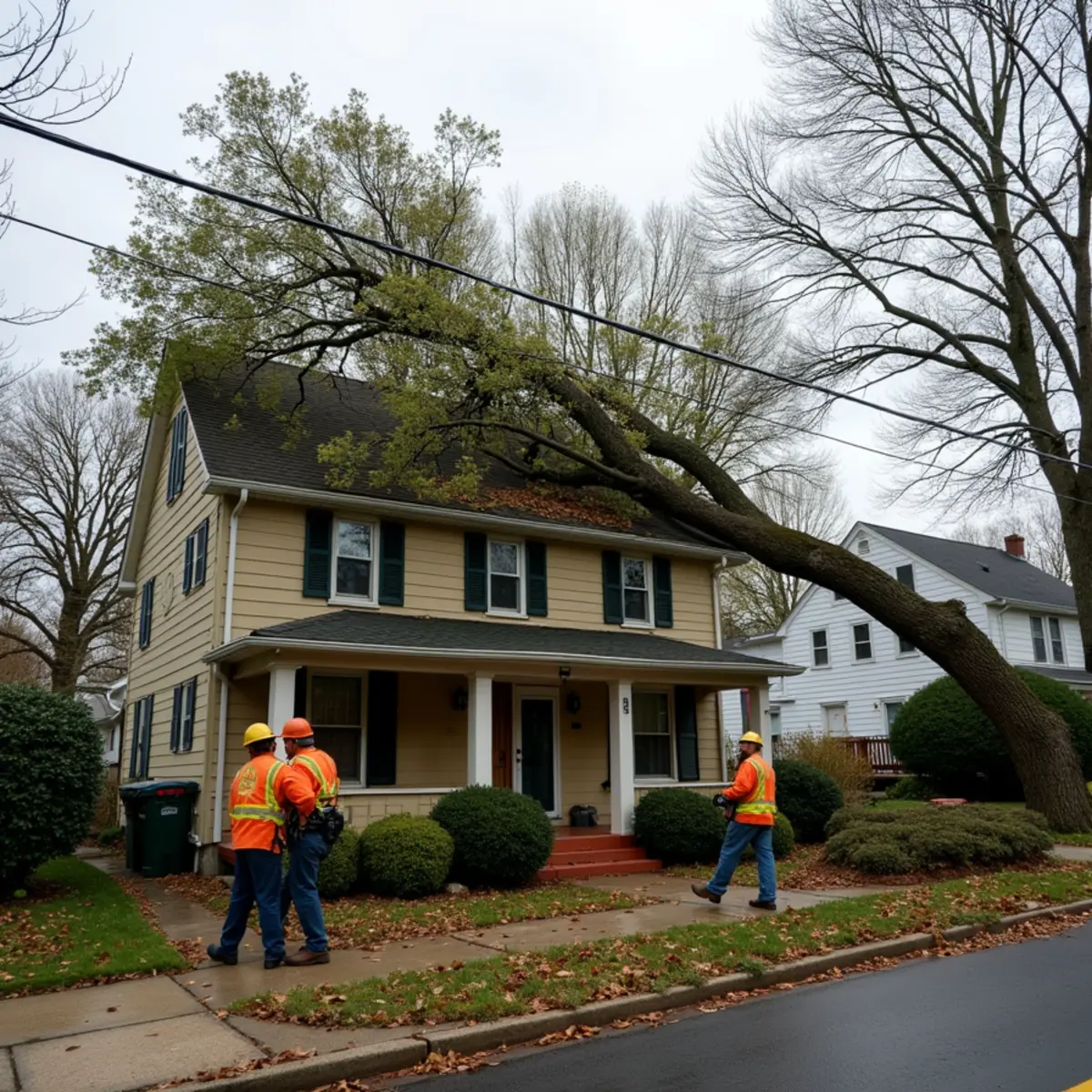
A tree through the roof is frightening, and the choices you make in the first half hour matter more than almost anything that follows. A trunk resting on a structure is still holding tremendous stored tension — pulling a branch, cutting the trunk, or nudging a limb with a vehicle can release that force without warning. This guide walks New Jersey homeowners through exactly what to do, in order.
It also pays to know the money and safety picture before you're standing under a downed tree: whether your homeowners insurance will cover the removal, and how a tree tangled with a power line changes the response entirely.
The First 30 Minutes: Safety Before Cleanup
Your first objective is separation from danger, not tidying up. Move everyone out of the affected rooms and away from the structure, and keep vehicles clear of the tree. Do not walk beneath suspended limbs, do not climb onto the roof, and do not start a chainsaw.
If anyone is injured, there is a fire, or a power line is involved, call 911 or your utility first. Stay at least 30 feet from any downed line and keep everyone away from anything the line is touching — the tree, a fence, or a car. The wire does not have to spark to be lethal.
Document the Scene Safely
Once people are safe, photograph the scene from a safe distance before anything moves. Wide shots are more useful to an insurer and a contractor than a risky close-up. Capture the full tree, the point where it failed, the damaged roof or vehicle, any lifted soil or exposed roots, visible wires, your house number, and the access route. Record the date, time, and a short description of the storm, and back up the files before you send them anywhere.
When to Call for Emergency Removal
Call for professional help the moment a tree is on a structure, blocking your only access, leaning hard after the storm, or tangled with a utility. Our 24/7 emergency tree service answers with a live dispatcher, and removing a fallen tree from a house is one of the most specialized jobs in the trade. We lift and rig sections up and away from the structure instead of adding load to it, then tarp the opening where it is safe to limit water damage.
Protect Your Insurance Claim
Leave the tree in place until your insurer, the utility, or a tree professional gives direction — unless moving it is needed to protect people or prevent immediate further damage. Notify your insurer, ask what emergency work they authorize, and keep every photo, estimate, and invoice. Our team provides the itemized documentation that keeps an insurance claim for tree removal moving, though your carrier ultimately decides coverage.
Why New Jersey Sees So Many of These Calls
Central New Jersey sits squarely in the path of Atlantic nor’easters. In Trenton alone, 2025 brought 30 thunderstorm days, 32 heavy-rain days, and a 60-mph gust. Saturated soil weakens root anchoring, and a tree that stood for decades can uproot in a single storm. Across Mercer County, that combination keeps our emergency crews busy every storm season.
If a tree is on your home right now, don’t wait it out. Get everyone clear, call 911 or your utility for any line or life-safety issue, then call us for safe, insured removal.
Crane or Climb: How the Tree Comes Off Your Roof
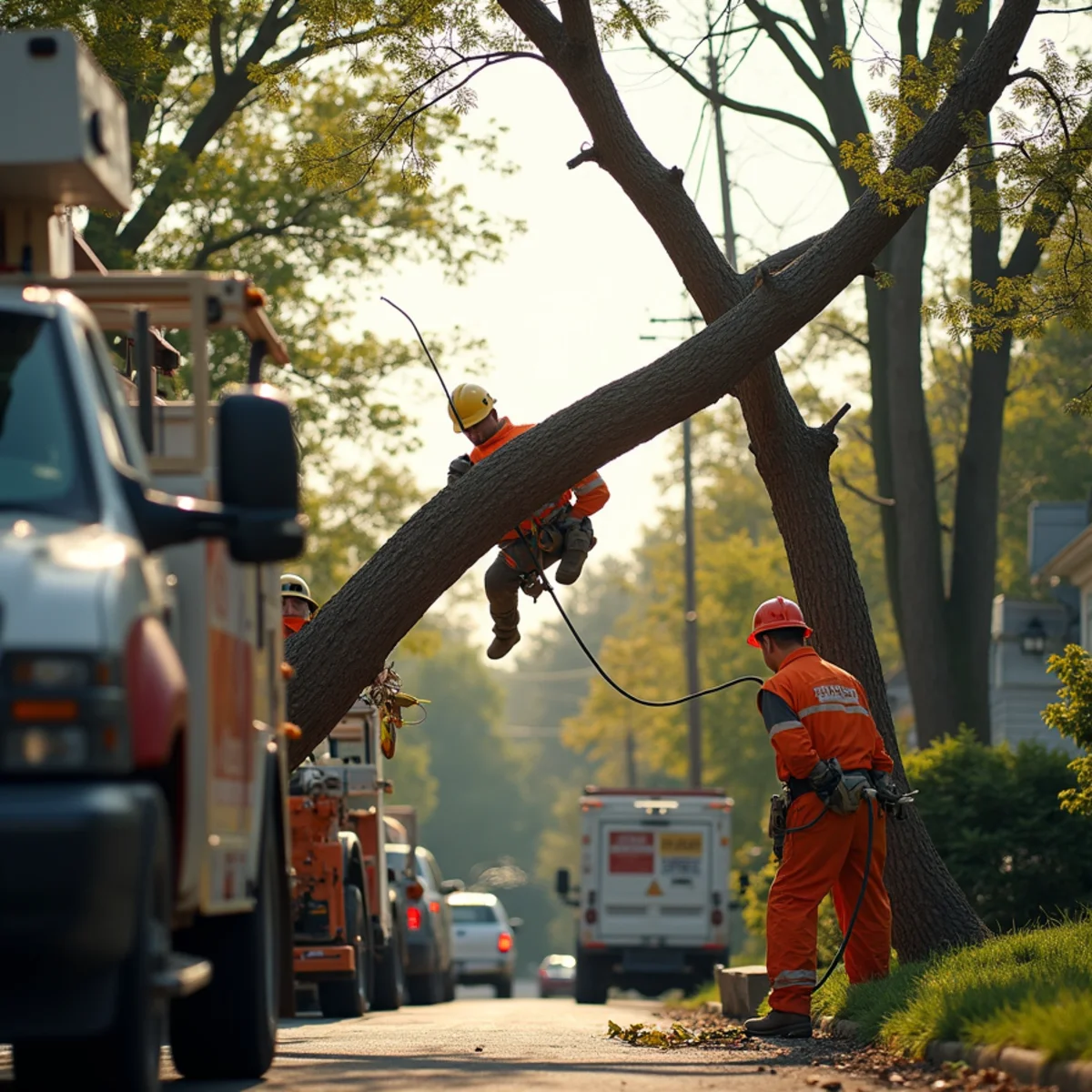
Once everyone is safe, the method is the whole game. A trunk lying across a roof is holding tension and pushing load into the structure — cut it in the wrong place and it can spring, roll, or drive deeper into the house. On open lots with room to work, our climbers may rig sections down under rope control. On Trenton's tight rowhome blocks, a crane staged in the street is usually safer: it holds each section while the climber cuts, then lifts it up and away from the house instead of dragging weight across the roof.
Either way the sequence is planned before the first cut — where the weight sits, where it will move, and where the crew stands. That planning is exactly what separates a controlled removal from a second hole in your ceiling.
What to Expect in the First 24 Hours
- Make-safe visit. We relieve tension, remove the immediate hazard, and tarp the opening where it's safe so rain stays out.
- Documentation. You get safe-position photos and an itemized scope for your insurance claim before full removal begins.
- Full removal & cleanup. The rest of the tree comes down, the stump is ground if you want, and debris is hauled.
- Handoff to your roofer. We leave a clean, documented scene so repairs can start without guesswork.
If a tree is on your home right now, don't wait it out. Get everyone clear, call 911 or your utility for any line or fire, then call our 24/7 emergency crew at (855) 615-0568.
Why Central New Jersey Sees So Many of These Calls
This isn't a rare event here. Central New Jersey sits squarely in the path of Atlantic nor'easters, and the numbers show it: Trenton alone recorded 30 thunderstorm days, 32 heavy-rain days, and a 60-mph wind gust in a single recent year. Those storms don't just snap dead branches — they topple healthy trees whose roots have lost their grip in saturated soil.
That last part is the piece homeowners miss. After days of heavy rain, the ground around a root plate turns to mush, and a tree that stood straight for forty years can lean, lift, and come down in the next gust. Lots near Mercer County's creeks and low-lying blocks are especially prone to it, which is why we always ask about recent rain and standing water when a tree comes down. A saturated-soil failure often means the neighboring trees are stressed too, and a post-storm inspection is worth the call.
Common patterns we respond to
- The single big limb through the roof — usually a dead or included-bark limb that finally let go over the house.
- The whole tree uprooted onto the structure — a saturated-soil root failure, common after multi-day rain.
- The lean that wasn't there yesterday — the root plate has shifted and the tree is now a countdown, not an emergency yet, but close.
In every case the safe move is the same: keep people clear, call the utility or 911 for any line or fire, and get a qualified crew to assess before anyone touches it. Guesswork beside a loaded tree is how a property-damage claim becomes an injury claim.