Prevention & Maintenance
Preparing Your Trees for Storm Season in New Jersey
By Master Tree RemovalSeptember 17, 20267 min read
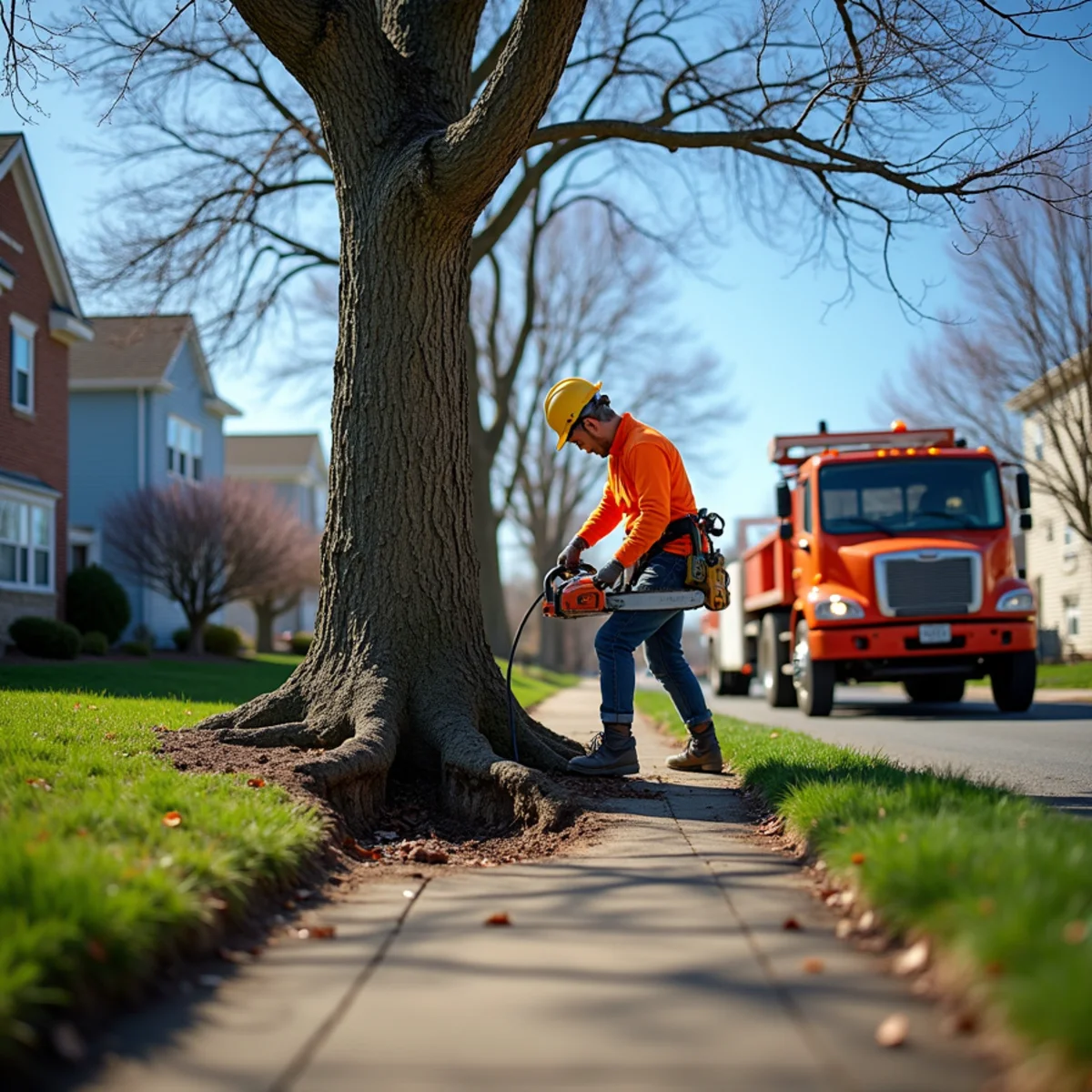
You prepare your trees for storm season in New Jersey by removing deadwood and hazard limbs, reducing dangerous end-weight, thinning dense canopies so wind passes through, and having any leaning or declining trees assessed before the wind arrives. The work that protects your home happens in the calm before the storm, not during it.
Storm prep is really preventive maintenance with a deadline, so it fits alongside the pre-winter safety checklist and our look at why nor'easter wind and wet snow snap NJ trees.
Why New Jersey Trees Are So Exposed
Central New Jersey sits in the path of Atlantic nor'easters and the remnants of hurricanes, and the numbers show it — Trenton alone recorded 30 thunderstorm days and a 60-mph gust in a recent year. Add saturated ground from heavy rain, which weakens root anchoring, and a tree that stood for decades can fail in a single storm. Preparation will not stop a hurricane, but it measurably lowers the odds that your tree is the one that comes down.
Your Pre-Storm Tree Checklist
- Remove deadwood over targets. Dead limbs above the roof, driveway, and cars fail first — clear them before the season.
- Reduce end-weight. Shortening over-extended, heavy limbs lowers the leverage wind uses to snap them.
- Thin dense canopies. Letting wind pass through, rather than pushing against a solid wall of foliage, reduces the sail effect.
- Address weak unions. A tight, included-bark V-union can be cabled before it splits.
- Check for lean and root issues. A new lean or lifted soil signals a tree that may already be failing.
- Clear limbs off the house and lines. Call your utility for anything touching a service drop.
What You Cannot Prep Away
Preparation reduces risk; it does not eliminate it. A severe enough storm will bring down even healthy trees, and no responsible crew promises otherwise. What preparation does is remove the predictable failures — the deadwood, the cracked limb, the obvious lean — so a storm has less to work with. It also means that if something does come down, you already know a crew to call, and our storm cleanup and 24/7 emergency teams respond fast when it counts.
Timing: Get Ahead of the Rush
The worst time to think about your trees is during the storm, and the second-worst is the week after, when every tree crew in the region is triaging emergencies. Schedule preventive work in the calmer stretches — spring before hurricane season, and fall before nor'easters — when crews have time and you are not competing with a hundred downed-tree calls.
Species and Age Change the Risk
Not every tree carries the same storm risk, and knowing which of yours are vulnerable is half the battle. Fast-growing, brittle species — silver maple, Bradford pear, willow — shed limbs in wind far more readily than dense hardwoods, and tall white pines with heavy upper crowns are notorious for snapping or uprooting in the saturated ground and wet snow of a nor'easter. Age matters too: a mature tree with a large, sail-like canopy catches far more wind than a young one, and an old tree with declining roots or internal decay may be living on borrowed time. A pre-season walk of your property, ideally with an arborist, sorts your trees into the ones that are sound, the ones that need a targeted prune to reduce risk, and the few that are hazardous enough to consider removing before a storm makes the decision for you.
What to Do the Moment a Storm Passes
Preparation and response are two halves of the same plan. When a storm clears, stay well away from any downed or hanging limbs and treat every fallen wire as live — call your utility, not a tree crew, for anything touching a line. Photograph damage before anything is moved; those images matter if an insurance claim follows. Then call a tree service for a safe assessment rather than trying to drag limbs off the roof yourself, where hidden tension in a bent branch can release with enough force to injure. Because we handle both the preparation and the aftermath, our clients are not scrambling to find a stranger's number in the dark — they already know who is coming, and our crews prioritize the properties we know and maintain. That head start is worth more than it sounds: in the crowded hours after a regional storm, the difference between a crew that already has your address on file and a scramble through a phone full of busy signals is often a full day of a tree sitting on your roof.
Expert Insight: A Pro Sees What You Cannot
Much of what makes a tree dangerous in a storm is invisible from the ground — internal decay, a hidden crack, a compromised root plate. A trained arborist reads those signals and prioritizes the trees that actually threaten your home, rather than guessing. That is the real value of a pre-season inspection, and care-plan members get it on a schedule plus priority when storms hit. Combined with targeted pruning, it is the most cost-effective storm insurance there is. Across Hamilton, Ewing, and the region, call (855) 615-0568 to book a pre-storm inspection before the next system rolls in.