Prevention & Maintenance
Tree Roots Damaging Sidewalks, Driveways and Historic Stone Walls in New Jersey
By Master Tree RemovalJune 17, 20266 min read
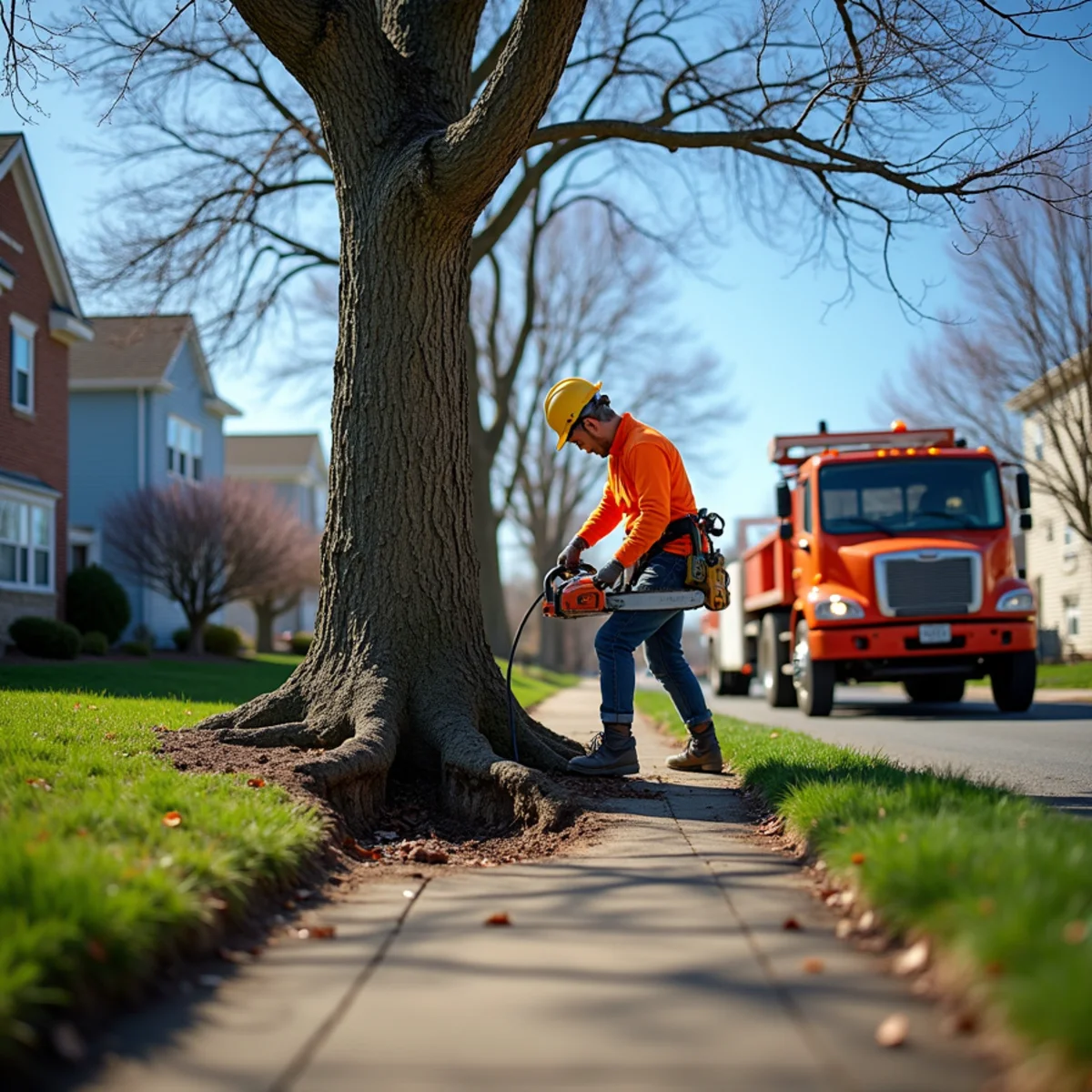
A mature tree’s roots do not stop at the lawn. Over decades they lift and crack sidewalks, heave driveways, and push apart the historic stone walls that give New Jersey’s older neighborhoods their charm. Dealing with it means balancing two things you care about: the hardscape and the tree.
Root conflicts and hardscape decisions go together, so this reads alongside rebuilding the space a tree leaves behind and the grinding-vs-excavation call when a root-heaving tree finally comes out.
Why It Happens
Roots grow where water and air are, and they thicken over time. A root running under a sidewalk slab or beside a stone wall will, given years, exert enough force to lift and crack it. In the historic districts of Trenton and along the old corridors of Lawrence Township, century-old trees and century-old walls are on a slow collision course.
Why You Can’t Just Cut the Root
The obvious fix — cut the offending root — is often the worst one. Large structural roots anchor the tree and feed it; sever the wrong one and you risk killing the tree or, worse, destabilizing it so it becomes a hazard. Root work near a mature tree should always be assessed by someone who understands the whole tree, not just the slab.
The Options
- Work around the root: ramp or reroute the walkway, or use flexible paving that flexes with growth.
- Selective root pruning: in some cases a smaller root can be pruned properly, away from the critical root zone — a judgment call for a professional.
- Rebuild with root barriers: when redoing the hardscape, install barriers to steer future growth.
- Remove and replace: when the tree itself is declining or the conflict is unresolvable, removal and stump grinding clear the way.
Fixing It Right
Because we handle both tree work and hardscaping and stonework, we can solve the whole problem — assess the tree, address the roots appropriately, and rebuild the walkway, driveway, or wall so it lasts. One crew, one plan, no finger-pointing between a tree service and a mason.
Roots wrecking your sidewalk or wall? Let’s find the fix that protects both the hardscape and the tree.
Your Options When Roots Lift Concrete
| Option | Best when |
|---|---|
| Work around the root (ramp/reroute) | Tree is healthy and worth keeping |
| Selective root pruning | A small root, away from the critical root zone |
| Root barrier + rebuild | You're redoing the hardscape anyway |
| Remove & replace | Tree is declining or the conflict is unresolvable |
Why You Can't Just Cut the Root
The obvious fix — sever the offending root — is often the worst one. Large structural roots anchor and feed the tree; cut the wrong one and you risk killing it or destabilizing it into a hazard. Root work near a mature tree should be judged by someone who understands the whole tree. Because we handle both tree work and hardscaping, we can solve the whole problem in Trenton's historic districts and Lawrence's old corridors. Roots wrecking your walk? Call (855) 615-0568.
Why the Obvious Fix Is Usually the Wrong One
When a root lifts a slab, the instinct is to cut it out and pour new concrete. On a mature tree, that's often the worst possible move. The large structural roots near the trunk are what anchor the tree against wind and feed it — sever one and you can starve the tree, destabilize it into a hazard, or both, trading a cracked sidewalk for a tree that now threatens the house. The roots that can sometimes be pruned safely are the smaller, more distant ones, and even then the call belongs to someone reading the whole tree, not just the slab.
In the historic districts of Trenton and the old corridors of Lawrence, this comes up constantly: century-old street trees and century-old walks and stone walls on a slow collision course. The right answer depends on which you value more and what the tree can spare — and that's a judgment, not a default.
Solutions that protect both the tree and the hardscape
- Ramp or reroute the walkway over or around the root, or switch to flexible paving that moves with growth.
- Root barrier + rebuild when you're redoing the hardscape anyway, steering future growth away.
- Selective, professionally judged root pruning for smaller roots outside the critical zone.
- Remove and replace only when the tree is already declining or the conflict truly can't be resolved.
Because we handle both the tree side and the hardscape side, we can weigh the whole problem and fix it once — no arborist and mason pointing fingers at each other across your cracked walk.
Preventing Root Conflicts Before They Start
The best time to deal with root-and-hardscape conflict is before it happens — and if you're planting new trees or replacing a walk, a few decisions now save you the hard choices later. Species selection is the biggest lever: some trees are notorious for aggressive surface roots, while others stay better behaved near pavement. Planting the right species the right distance from walks, drives, and foundations heads off most future problems.
When you're rebuilding hardscape near an existing tree, that's the moment to install a root barrier — a rigid panel set vertically to steer new root growth down and away from the slab rather than under it. Done during the rebuild, it's straightforward; retrofitting one later means disturbing the very roots you're trying to manage. Proper base design helps too: a well-drained, correctly compacted base flexes less and telegraphs root movement more slowly.
For existing conflicts, the honest path is a case-by-case judgment that weighs the tree's health and value against the damage — which is exactly why cutting the offending root blind is such a common mistake. Because we handle both the tree side and the hardscape side, we can look at the whole picture in the historic districts of Trenton and Lawrence and choose the fix that protects both — ramp the walk, barrier and rebuild, prune selectively, or replace the tree only if it's truly the last resort. Roots and pavement on a collision course? Call (855) 615-0568.