Cost & Insurance
Stump Grinding vs. Excavation: Reclaiming Your Yard After Tree Removal in NJ
By Master Tree RemovalMarch 4, 20266 min read
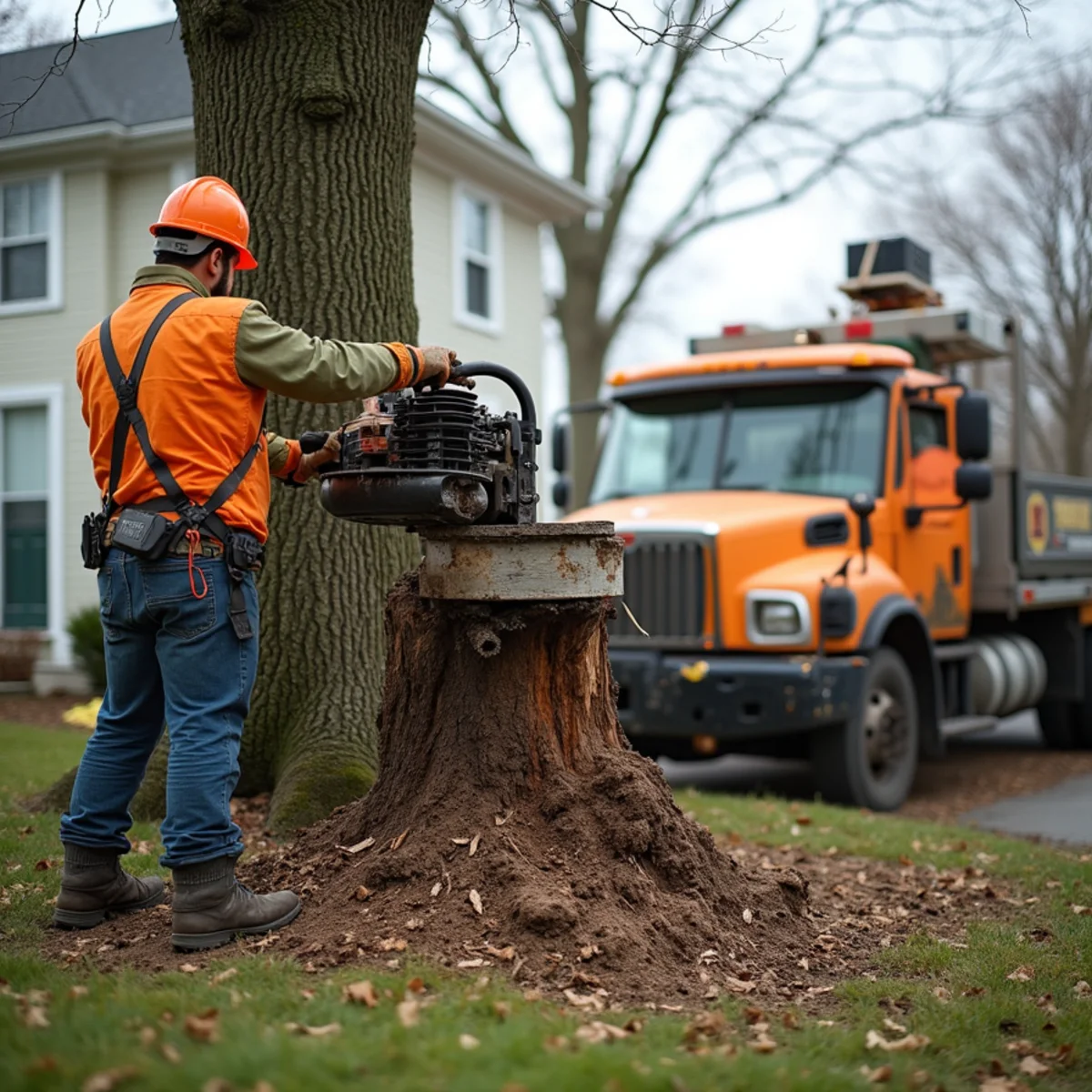
The tree is gone, but the stump remains — a trip hazard, a home for pests, and an obstacle to mowing, planting, or building. You have two real options: grind it, or excavate it. Here is how to choose.
Grinding is usually the last line on a removal invoice, so it's worth reading it alongside what tree removal itself costs — and if you're reclaiming the spot, how it feeds into a new patio or planting bed.
Stump Grinding: The Usual Answer
A grinder uses a carbide wheel to chew the stump and major surface roots into chips, typically 8–14 inches below grade — enough to replant grass or set a patio. It is faster, tidier, and less expensive than full extraction, and it leaves only a manageable void that can be backfilled with the grindings. For the vast majority of homeowners, stump grinding is the right call.
Full Excavation: When You Actually Need It
Excavation pulls the entire root ball out of the ground. It is only necessary when you need clean soil for a deep footing, a foundation, or utility work — situations where residual roots genuinely can’t remain. It leaves a large hole, disturbs far more of the yard, and costs considerably more. Choosing it when grinding would do simply buys you a bigger mess.
What It Costs
Published NJ ranges put grinding at roughly $75–$400 as an add-on, about $2–$4 per diameter inch, with typical single-stump averages near $100–$150. Diameter, grinding depth, surface-root work, and whether the grindings are hauled or left to backfill drive the number. Excavation, by contrast, is priced by the machine time and disposal it requires.
What “Grinding” Should Include
A clear scope states the depth, whether surface restoration is included, how chips are handled, and any root-zone limits near sidewalks, driveways, and stone walls. Remember: grinding removes the visible stump and agreed below-grade wood — it does not automatically remove every lateral root running through the yard.
From Stump to Finished Space
Once a stump is ground and the ground leveled, that corner of the yard is a blank slate. Many of our Ewing and Hamilton customers pair grinding with complete yard care to restore the whole area, or go a step further with landscaping and stonework — a patio, a bed, or a walkway where the tree used to be.
Got a stump to deal with? We’ll grind it clean and leave the ground ready for whatever comes next.
Grinding vs. Excavation at a Glance
| Grinding | Full excavation | |
|---|---|---|
| Depth | 8–14 in. below grade | Entire root ball |
| Yard disturbance | Minimal | Large hole |
| Cost | Lower | Higher |
| Best for | Replanting grass, patios, most yards | Deep footings, foundations, utilities |
What Happens to the Hole and the Chips
Grinding leaves a pile of wood chips in the void. You can backfill with the grindings (they settle over time, so mound them) or have us haul them off and top the spot with clean soil — the better choice if you plan to replant, since decomposing chips rob nitrogen from new roots. Our stump grinding service writes the depth, restoration, and haul-off terms into the scope so there are no surprises.
Reclaiming a yard after a removal in Ewing or Hamilton? Call (855) 615-0568 and we'll grind it clean and level the ground.
What "Grinding" Does and Doesn't Remove
The most common misunderstanding about stump grinding is that it pulls out the roots. It doesn't, and it isn't supposed to. Grinding reduces the visible stump and the major surface roots to chips down to an agreed depth; the lateral roots running out through your yard stay in the ground and decompose naturally over the following seasons. For lawns, patios, and replanting nearby, that's exactly what you want — full extraction of every root would tear up half the yard for no benefit.
Full excavation is a different animal, reserved for when the ground itself has to be clean: a foundation, a deep footing, a utility trench. It leaves a large hole, disturbs far more soil, and costs considerably more. Choosing it when grinding would do simply buys you a bigger mess and a bigger bill.
Planning the spot after the stump is gone
What you do next dictates how we grind. Reseeding grass? Standard depth and a soil cap over the grindings is fine. Laying a patio or setting a post? We grind deeper and often haul the grindings off, swapping in clean fill so the base compacts properly — the same coordination behind our hardscaping projects. Replanting a tree in the same spot? That's the one case where the leftover chips work against you, robbing nitrogen from new roots as they break down, so we grind deep and replace with topsoil.
Whatever the plan, we write the depth, the root-zone limits near walks and walls, and the haul-or-backfill decision into the scope before starting. Reclaiming a yard in Ewing or Hamilton comes down to matching the grind to what comes next.
The Pests and Problems a Stump Invites
A stump isn't a neutral leftover — it's an active liability the longer it sits. Decaying wood is exactly what carpenter ants and termites look for, and a rotting stump near the house is essentially an invitation parked a few feet from your foundation. It also hosts fungi that fruit as mushrooms across the lawn, and many species will throw up a ring of suckers from the old root system, so you end up mowing around a stubborn thicket that regrows all season.
Then there's the plain hazard. A ground-level stump hidden in turf is a genuine trip-and-fall risk and a mower-killer — hitting one can wreck a deck or throw debris. For anyone selling a home, a yard dotted with old stumps reads as deferred maintenance to buyers, quietly working against the listing.
Grinding solves all of it at once: the stump and major surface roots become chips, the pest habitat is gone, the trip hazard disappears, and the spot is ready to reseed or build on. Because it's faster and far less disruptive than excavation, it's the right answer for the overwhelming majority of residential situations across Ewing, Hamilton, and the county. If you're reclaiming a yard or clearing the way for a patio or bed, our grinding service leaves the ground level and ready. Call (855) 615-0568.