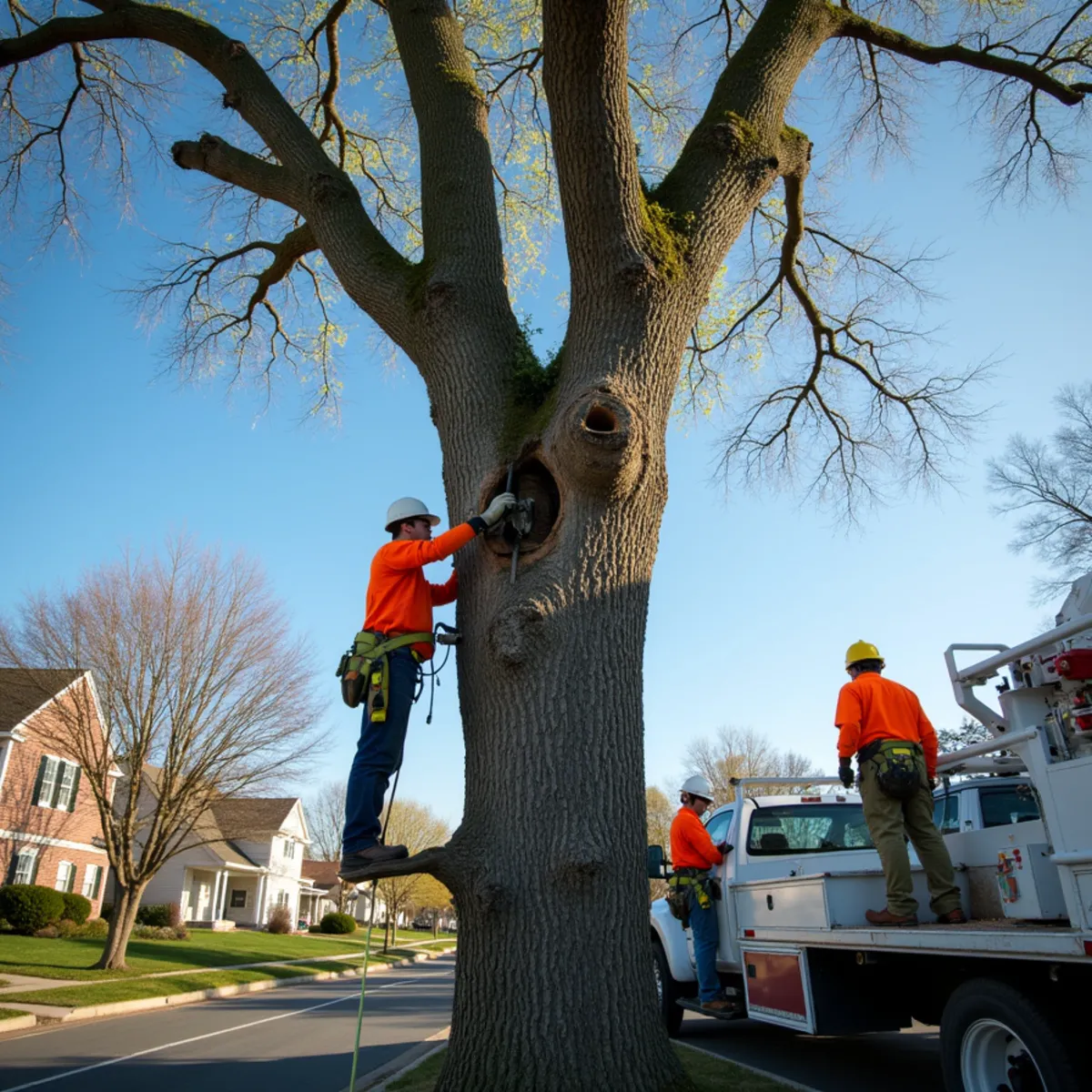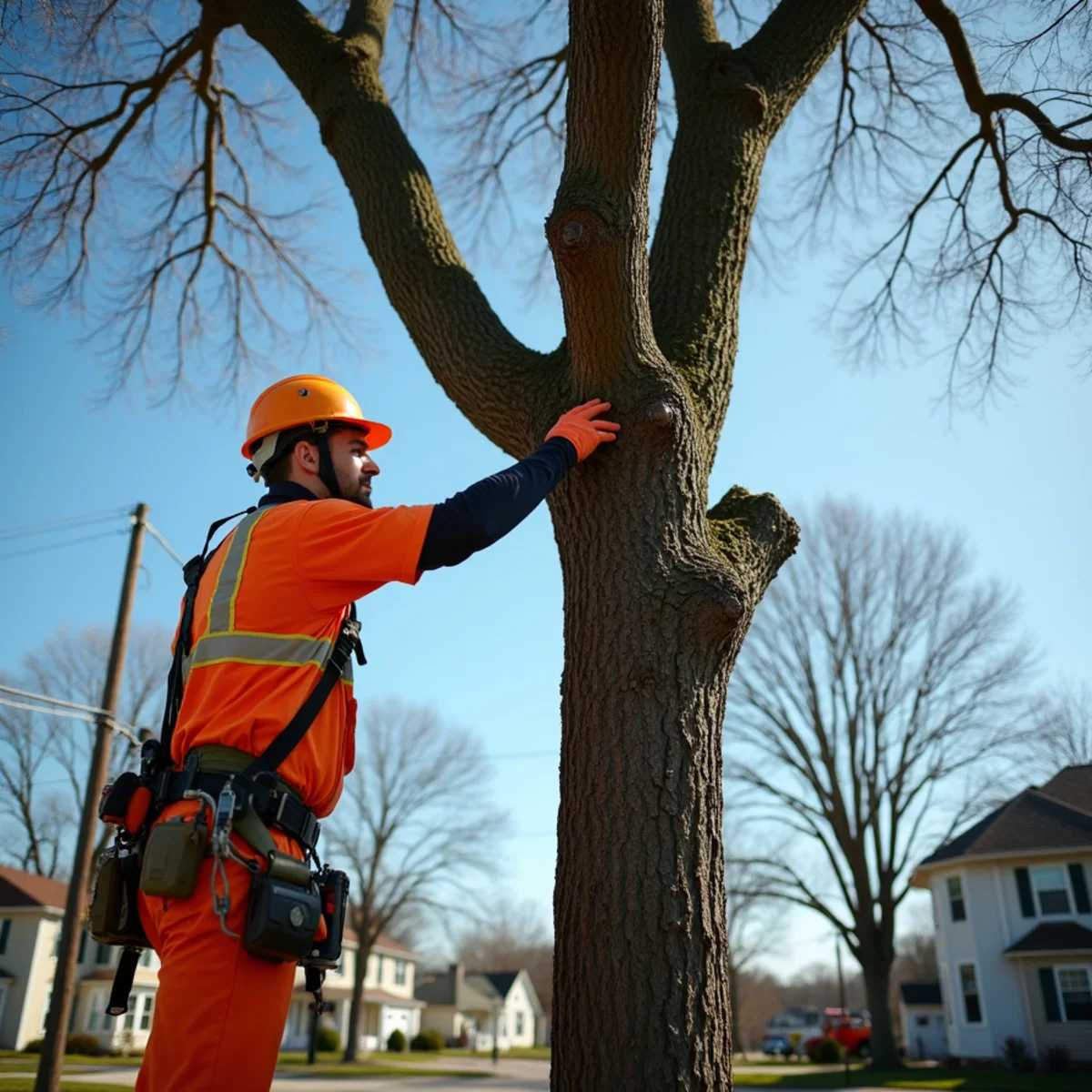
Emerald ash borer has killed ash trees across New Jersey, and a dead ash is uniquely dangerous: the wood goes brittle fast, so limbs and whole trunks can shatter and drop with almost no warning. Master Tree Removal Services removes borer-killed ash and other diseased, declining trees before they come down on their own.
From the Sourland Mountain foothills around Hopewell to fencerows in Mansfield and shade trees in Hamilton, dead ash is everywhere — and every season standing makes removal more hazardous.
Signs of a Dead or Dying Ash
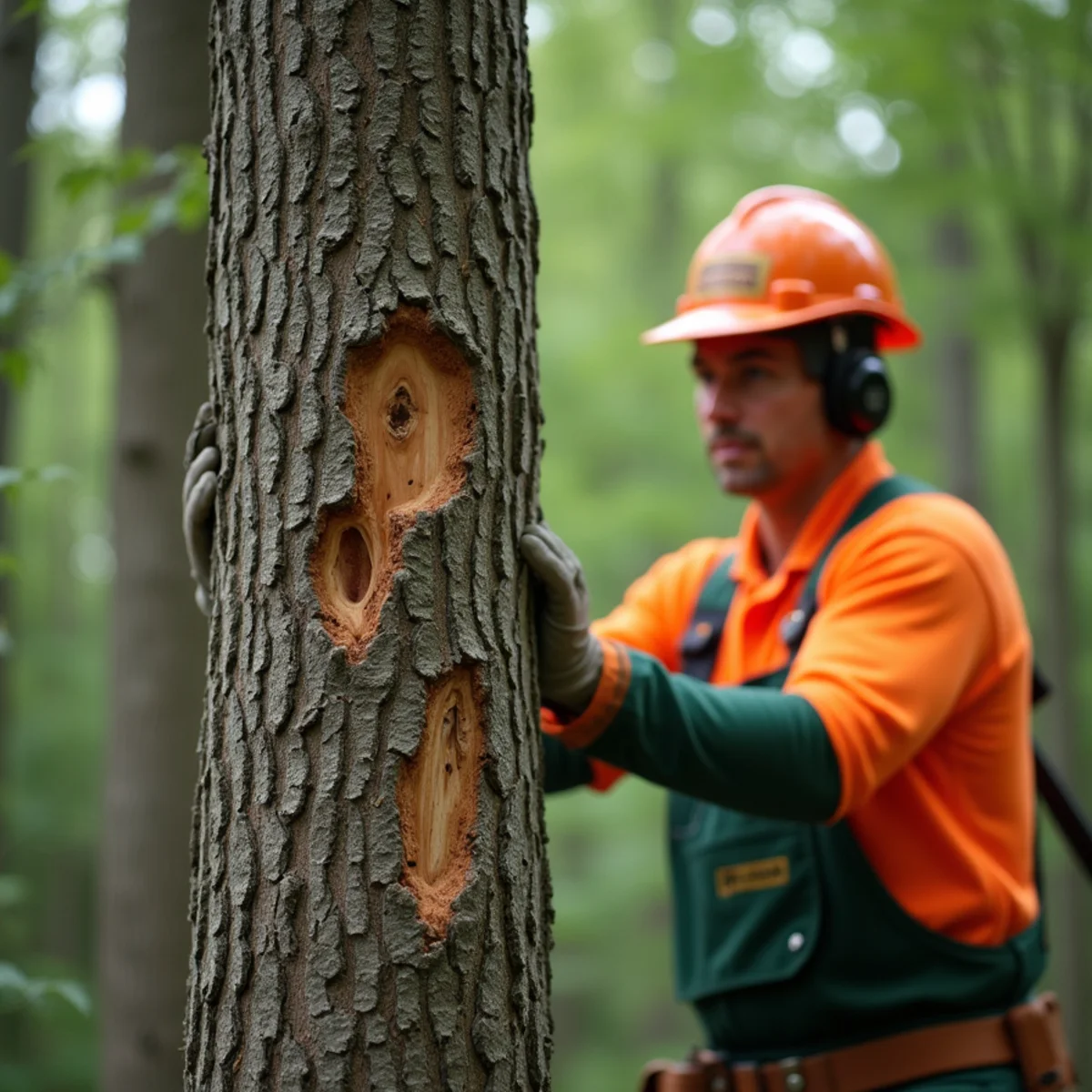
Emerald ash borer leaves clear signals. Watch for:
- A thinning or bare upper canopy while lower limbs still leaf out
- Vertical bark splits running down the trunk
- Blonding — pale patches where woodpeckers stripped the bark
- Tiny D-shaped exit holes about an eighth of an inch across
- S-shaped tunnels in the wood just under the bark
- Sprouts erupting from the trunk and base (a stress response)
Why Dead Ash Can’t Wait
A living tree flexes and holds together under load. A borer-killed ash does the opposite — the wood dries, cracks, and loses strength, so it fails suddenly and unpredictably. Climbing a dead ash is far riskier than climbing a live tree, which is why timing and method matter so much.
Removing ash while some structural integrity remains is safer and often less expensive than waiting until it is a shattered hazard over your roof or a road.
Spotting the Signs Early
Watch for a thinning or bare upper canopy, vertical bark splits, blonding where woodpeckers strip bark to reach larvae, S-shaped galleries under the bark, and small D-shaped exit holes. Sprouts along the trunk are a stress response worth a professional look.
If you suspect a dead or dying ash, keep people and vehicles from parking or playing beneath it and call for an assessment.
Why Dead Ash Can’t Wait a Season
A living tree flexes and holds together under load. A borer-killed ash does the opposite — the wood dries, cracks, and loses strength fast, so limbs and whole trunks shatter and drop with almost no warning. That makes climbing a dead ash far riskier than climbing a healthy tree.
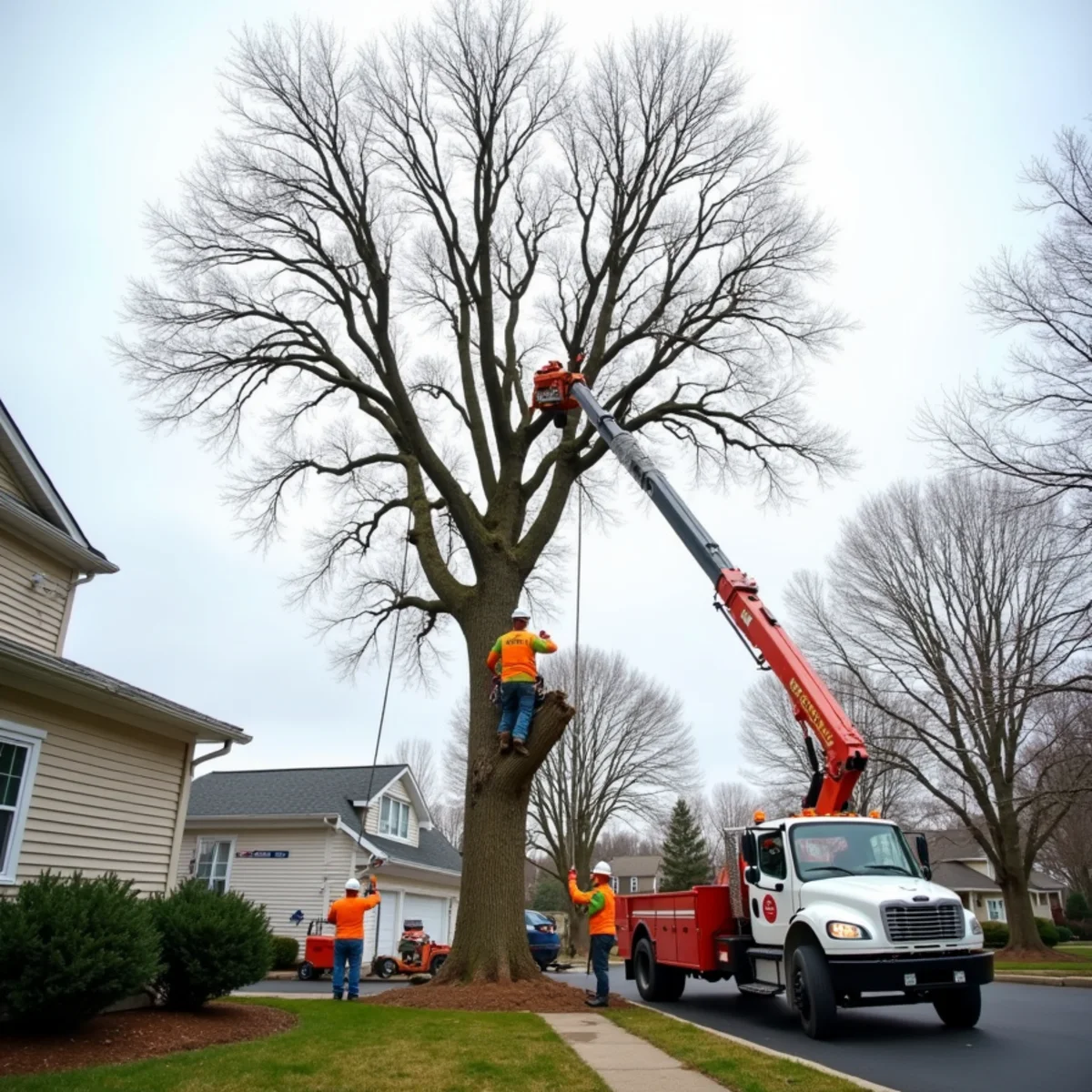
Removing ash while it still has some structural integrity is safer and usually less expensive than waiting until it’s a brittle hazard over your roof or a road. Badly decayed trunks come down with crane assistance rather than a climber.
Our Process
- 1Diagnose the declineWe confirm borer damage or disease and judge how much structural integrity remains.
- 2Choose a safe methodBrittle or large trees may require crane assistance rather than climbing.
- 3Careful removalThe tree is taken down in a controlled sequence suited to weakened wood.
- 4Grind & haulThe stump is ground per scope and all debris hauled.
What Affects the Cost
We don’t post fake flat prices — every tree is different. Your written estimate is based on the factors below, itemized so you can see exactly what you’re paying for.
- Tree size and degree of decay
- Whether crane assistance is required for brittle wood
- Proximity to structures, wires, and access
- Stump grinding and root work
- Debris volume and hauling
Why Choose Master Tree for Dead Ash Tree Removal
Master Tree Removal Services, LLC has served Trenton and Mercer County since 2018, with a 4.9-star reputation across 187 reviews. For dead ash tree removal, that experience shows up in the details:
- Early, honest diagnosis of borer damage and decline
- Techniques matched to brittle, unpredictable dead wood
- Crane assist on hand for large or hollow trunks
- Removal before the tree becomes an emergency call
- Local, family-run, and dependable — 8+ years serving Trenton and all of Mercer County.
Dead Ash Tree Removal Across Trenton & Mercer County
From the Sourland foothills around Hopewell to fencerows in the farmland, we fell borer-killed ash across Mercer County and beyond. We provide dead ash tree removal in Hamilton, Ewing, Lawrence, Princeton, Hopewell, and across all of Mercer County. Call (855) 615-0568 for a free, no-pressure written estimate.