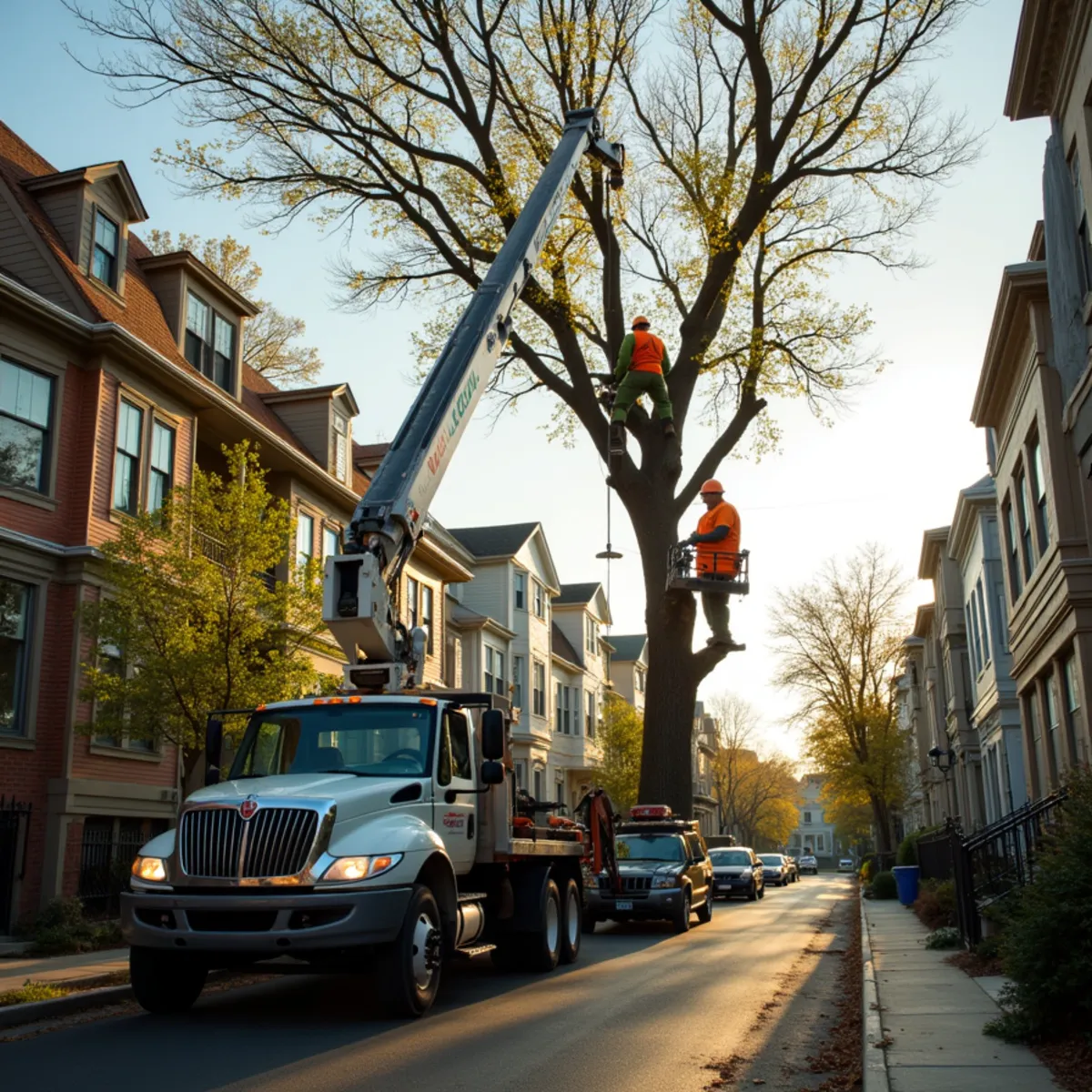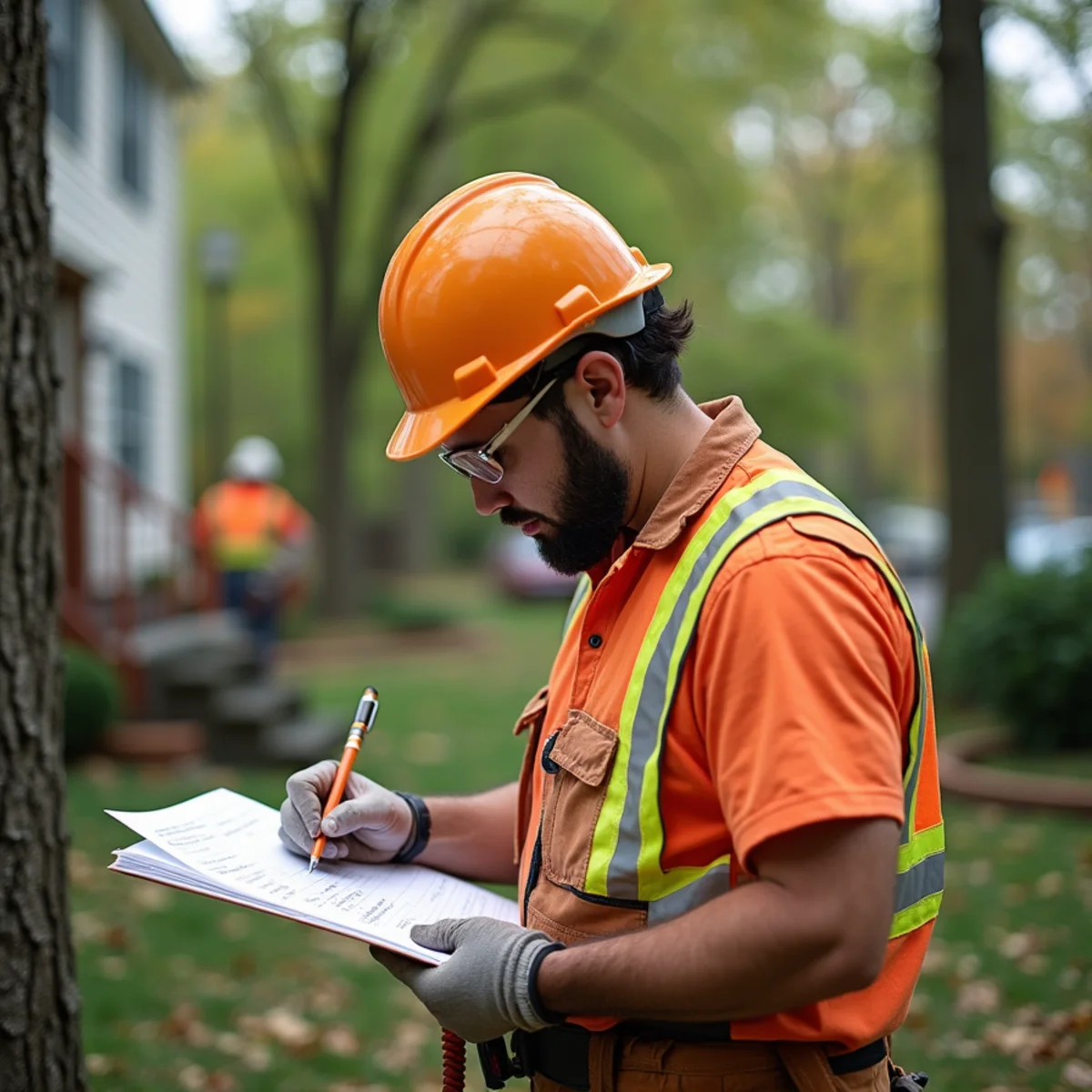
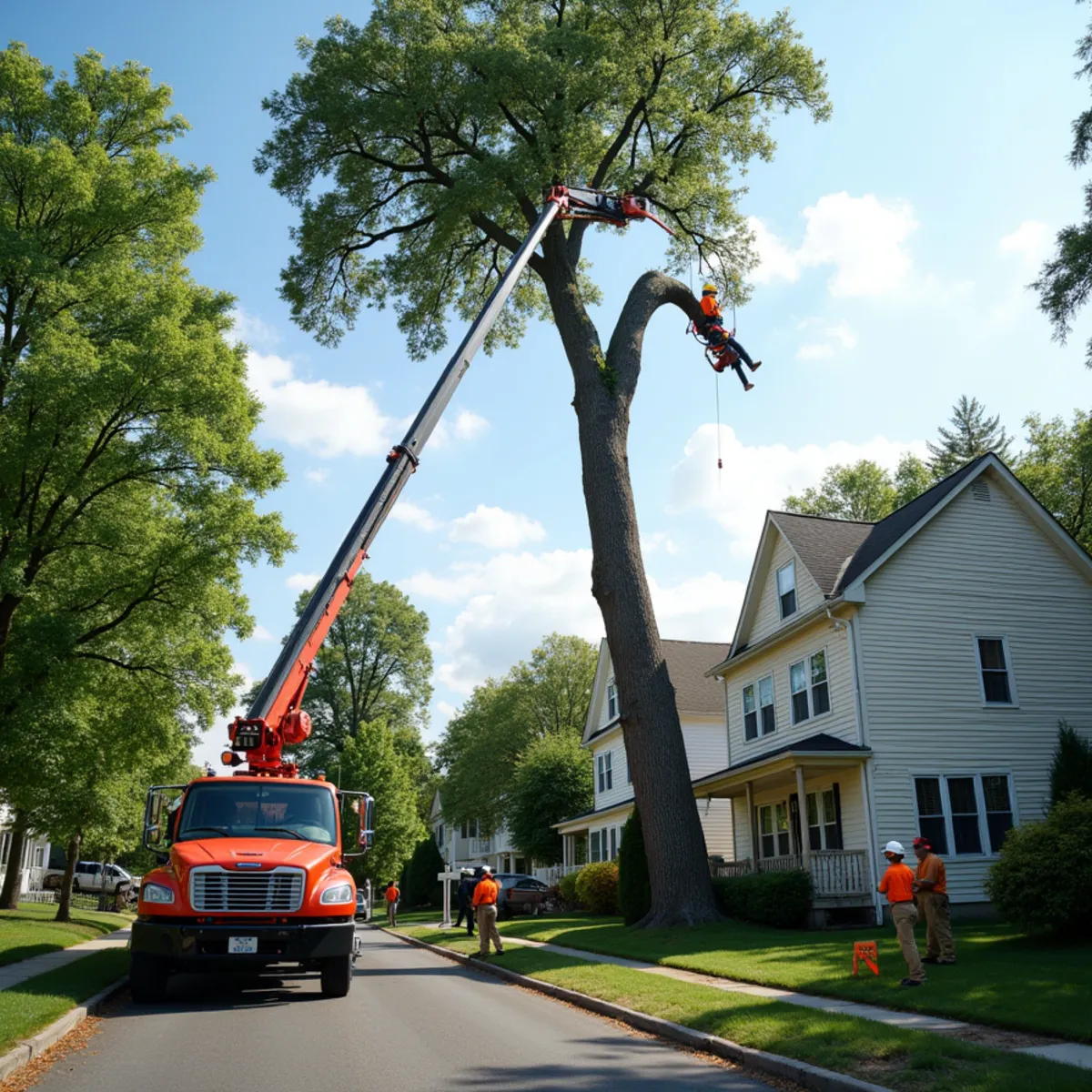
When a tree is too large, too decayed, or too hemmed in by structures and wires for ground-based work, a crane is the safest tool for the job. Master Tree Removal Services uses crane-assisted dismantling to lift heavy sections straight up and away from your home — no dropping limbs, no risky rigging over the roof.
It is the method of choice for towering silver maples over a Hamilton back deck, decaying hardwoods on a Princeton estate, or a tree wedged behind a Trenton rowhome where nothing else can reach.
When a Crane Is the Right Tool
Crane-assisted removal is the safest option when a tree is:
- Too large or heavy to rig down safely by climbing
- Decayed or hollow, making the trunk unsafe to climb
- Boxed in with no drop zone between structures
- Directly over a house, garage, or pool
- Wedged behind a fence or building nothing else can reach
- A storm-damaged giant that must come down fast
When a Crane Is the Right Choice
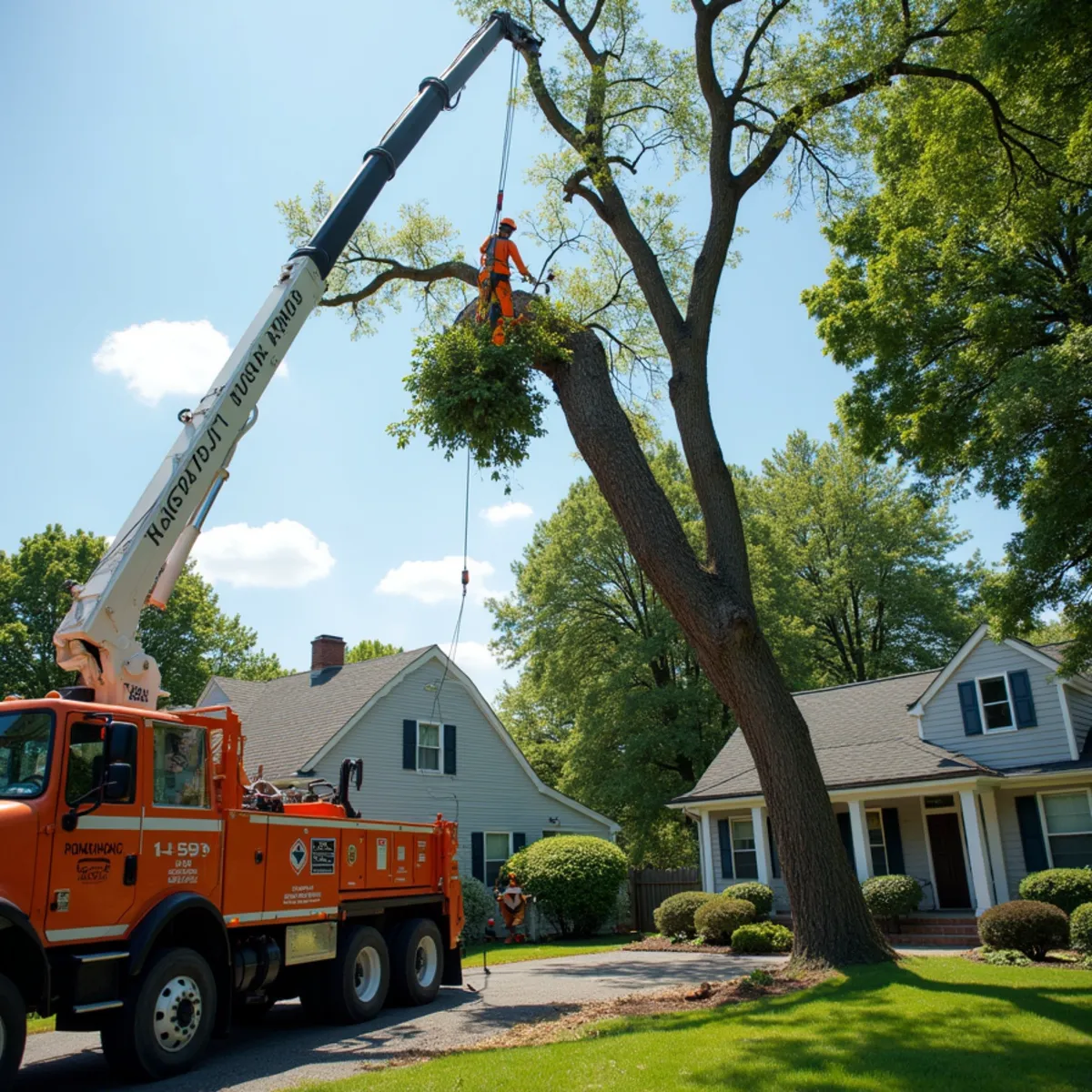
Cranes come into their own on massive trees, trees with internal decay that make climbing unsafe, and trees whose position leaves no safe drop zone. Instead of a climber rigging heavy wood down past a roof, the crane holds each section while it is cut, then lifts it over the house to the landing zone.
That takes load off the structure and off the climber, and it dramatically shortens the time a hazardous tree is in a partially-cut state.
Planning the Pick
Every crane removal is planned around reach, capacity, and setup. On Trenton’s narrow streets that often means reaching over the house from a staged position in the road with traffic control; on open lots the crane may set up beside the tree. We calculate pick weights and stage a clear landing and processing zone before the first cut.
How We Plan the Pick
Every crane removal is engineered before the boom goes up. We assess reach, capacity, and setup, calculate the weight of each pick, and stage a clear landing and processing zone. On Trenton’s narrow streets that often means reaching over the house from the road with traffic control in place.
The crane holds each section while the climber cuts it, then lifts it up and over the structure to the landing zone. That takes load off both the house and the climber and dramatically shortens the most dangerous phase of the job.
Our Process
- 1Site & pick planWe assess reach, capacity, setup, and pick weights, and arrange any traffic control.
- 2Stage the craneThe crane and landing zone are set up and the work area secured.
- 3Lift & cut sectionsThe crane holds each section as it is cut and lifts it clear of the structure.
- 4Process & cleanSections are processed at the landing zone, the stump ground per scope, and the site cleaned.
What Affects the Cost
We don’t post fake flat prices — every tree is different. Your written estimate is based on the factors below, itemized so you can see exactly what you’re paying for.
- Tree size, weight, and degree of decay
- Crane size and reach required
- Setup location and any traffic-control needs
- Access and landing-zone space
- Stump grinding, debris volume, and hauling
Why Choose Master Tree for Crane Tree Removal
Master Tree Removal Services, LLC has served Trenton and Mercer County since 2018, with a 4.9-star reputation across 187 reviews. For crane tree removal, that experience shows up in the details:
- Heavy sections lifted clear of the house, not rigged past it
- Faster, lower-impact removal than pure climbing on big trees
- Reaches trees behind fences, garages, and other obstructions
- Coordinated traffic control where street setup is required
- Local, family-run, and dependable — 8+ years serving Trenton and all of Mercer County.
Crane Tree Removal Across Trenton & Mercer County
From towering silver maples over a Hamilton deck to decaying hardwoods on a Princeton estate, our crane removals reach confined properties across Mercer County. We provide crane tree removal in Hamilton, Ewing, Lawrence, Princeton, Hopewell, and across all of Mercer County. Call (855) 615-0568 for a free, no-pressure written estimate.