Cost & Insurance
How Much Does Tree Removal Cost in Central New Jersey? (2026 Price Breakdown)
By Master Tree RemovalFebruary 11, 20268 min read
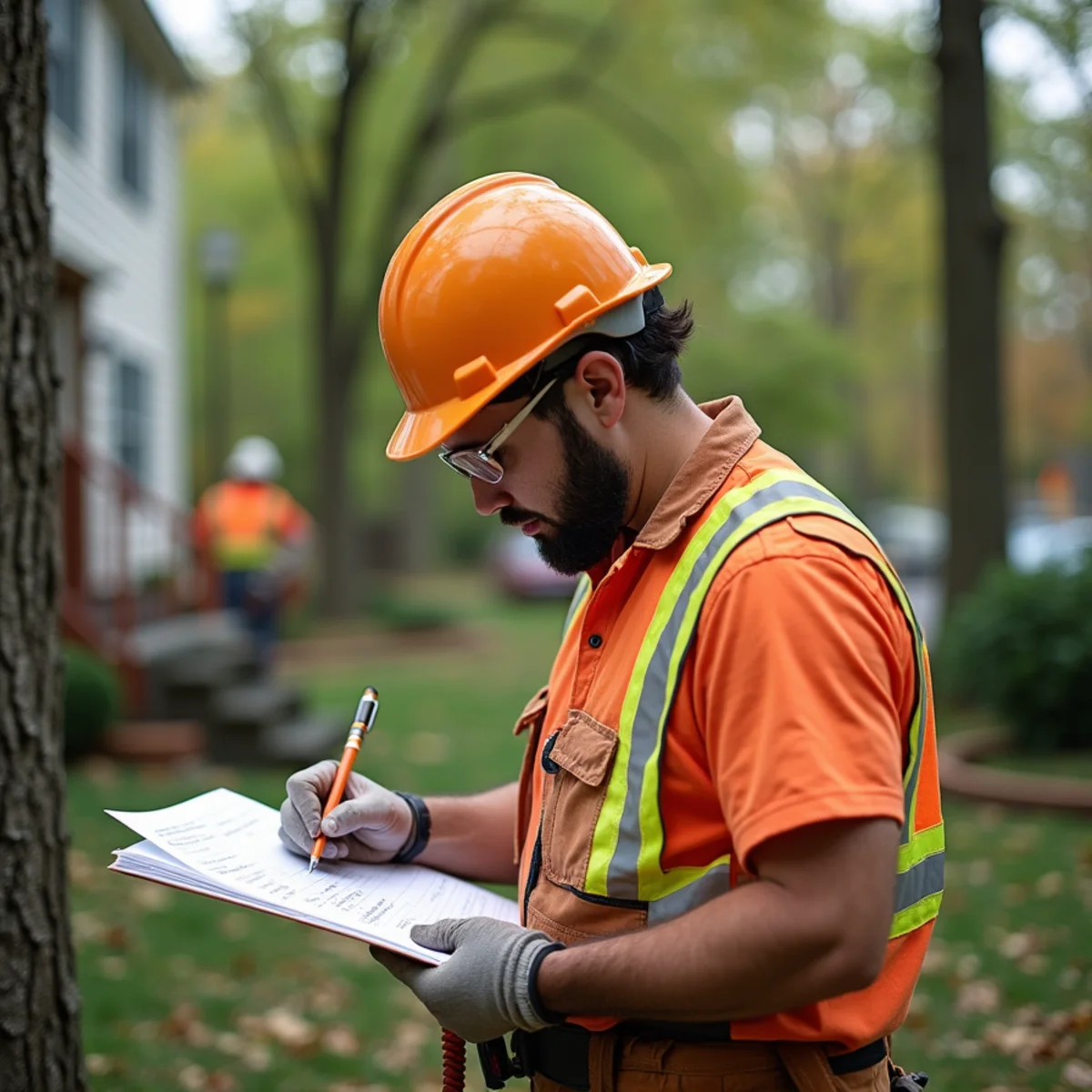
“How much to take down that tree?” is the first question every homeowner asks, and the honest answer is: it depends on the tree. Still, published planning ranges give you a useful starting point. Here is what the numbers look like in central New Jersey for 2026, and — more importantly — what actually drives your price.
Price never stops at the felling, either — plan for the stump work that follows, and if a storm was involved, check first whether insurance will cover part of the bill.
Published Planning Ranges
Local estimates place removal for trees under 30 feet at roughly $195–$390, trees 30–60 feet at $390–$1,152, and large trees at $1,152–$1,645. Broader directories run higher for complex work — small removals around $240–$720, medium $720–$2,160, and large $2,160–$5,400, with emergency work spanning a very wide band. Stump grinding commonly appears at $75–$400 as an add-on, or roughly $2–$4 per diameter inch.
These are planning ranges, not quotes. The spread exists because two “large” trees can be completely different jobs.
What Actually Sets the Price
- Height and trunk diameter — the single biggest driver.
- Lean and targets — a tree leaning over a roof, road, or utility takes far more control than one with a clear drop zone.
- Access — narrow gates, fenced yards, and no room to stage equipment mean more hand-rigging and time.
- Crane and traffic control — needed for big or trapped trees, especially on tight urban lots.
- Stump work — diameter, grinding depth, and restoration.
- Cleanup and hauling — debris volume, plus any emergency or storm-demand timing.
On the historic, tight lots of Trenton, access and rigging often matter as much as the tree’s size. On Princeton estates, protected specimen trees and municipal ordinances can add steps. That is why our tree removal service always quotes the actual tree after a site visit.
Why a Written Scope Beats an Online Estimate
A free estimate is not automatically a complete estimate. A reliable scope separates removal, rigging, crane work, stump grinding, hauling, restoration, emergency premiums, and taxes so you can compare apples to apples. An unusually low total often omits hauling, stump work, or cleanup — costs that reappear later.
How to Compare Bids
When a tree is stable and there is no immediate danger, get at least two written scopes and compare them line by line: which trees and methods are included, how stump depth and restoration are handled, what the debris terms are, and whether liability and workers’ compensation are verified. Do not delay an actively failing tree just to collect bids.
Want a real number for your tree, not an average? Call us for a written estimate.
A Quick Cost Snapshot (Planning Ranges Only)
| Job | Typical planning range | Biggest cost driver |
|---|---|---|
| Small tree (under 30 ft) | $195–$390 | Access |
| Medium tree (30–60 ft) | $390–$1,152 | Rigging vs. drop zone |
| Large tree | $1,152–$1,645+ | Size, crane, targets |
| Stump grinding | $75–$400 add-on | Diameter & depth |
These are published market ranges, not quotes — emergency, crane, and structure-adjacent work runs higher. See our tree removal service for how we scope the actual tree.
The "Hidden" Costs a Cheap Quote Hides
An unusually low number almost always leaves something out. Before you compare totals, make sure each quote lists the same work: stump grinding, debris hauling, traffic control, and cleanup are the four line items most often missing from a lowball. A written, itemized scope is the only way to compare fairly — which is why we put ours in writing on every job across Trenton and Princeton.
Want a real number instead of a range? Call (855) 615-0568 for a free written estimate on your tree.
Why Two "Large Tree" Quotes Can Differ by Thousands
Homeowners are often stunned that two crews quote wildly different numbers for the "same" tree. The tree isn't the whole job — everything around it is. A sixty-foot oak with a clear drop zone and a driveway to back the chipper up to is a fraction of the cost of the identical oak wedged between two houses with wires overhead and a fenced back yard. One is a controlled fell; the other is hours of technical rigging or crane work with traffic control.
Here's what actually moves the number, roughly in order of impact:
- Access. Can equipment reach the tree, or does everything come out by hand through a gate?
- Targets. A house, wires, a pool, or a neighbor's fence under the tree all demand slower, safer work.
- Size and lean. Height, trunk diameter, and which way it wants to fall.
- Crane and traffic control. Needed for big or trapped trees, especially on tight streets.
- Cleanup scope. Haul everything, grind the stump, leave the wood — each is a line item.
How to protect yourself on price
Get the scope in writing and make sure every quote covers the same work before you compare bottom lines. The lowball that "forgot" stump grinding, hauling, and traffic control isn't cheaper — it's incomplete, and the difference reappears as a change order. Our removal estimates itemize labor, rigging, crane, stump, hauling, and cleanup separately so you can see exactly where the money goes, whether you're in Trenton, Princeton, or anywhere across the county.
Questions to Ask Before You Sign Anything
The estimate is only as good as the questions behind it. Before you authorize a removal, run through this short list with any contractor — the answers separate a complete professional scope from a number scribbled on a card:
- Is stump grinding included, and to what depth? "Removal" often stops at the flush cut.
- Who hauls the wood, brush, and chips — and is that in the price? Debris is the most common hidden add-on.
- Do you carry general liability and workers' compensation, and can I see the certificates? An uninsured crew injured on your property is your problem.
- Is traffic control or a permit needed, and who arranges it? Matters on tight streets and for larger trees.
- What's your plan if the tree behaves unexpectedly? A real crew has an answer.
That last question is the tell. Removals go sideways when a decayed trunk gives early or a hinge doesn't hold, and the crews worth hiring have thought about it. Ours plan the sequence — where the weight sits, where it moves, where everyone stands — before the first cut, whether the job is a backyard maple in Hamilton or a crane pick over a rowhome in Trenton. Price matters, but on a job where a mistake goes through your roof, the cheapest incomplete quote is the expensive one. Get the scope in writing and call (855) 615-0568 for a real number on your tree.