Cost & Insurance
How Much Does Tree Trimming Cost in NJ? 2026 Guide
By Master Tree RemovalAugust 5, 20267 min read
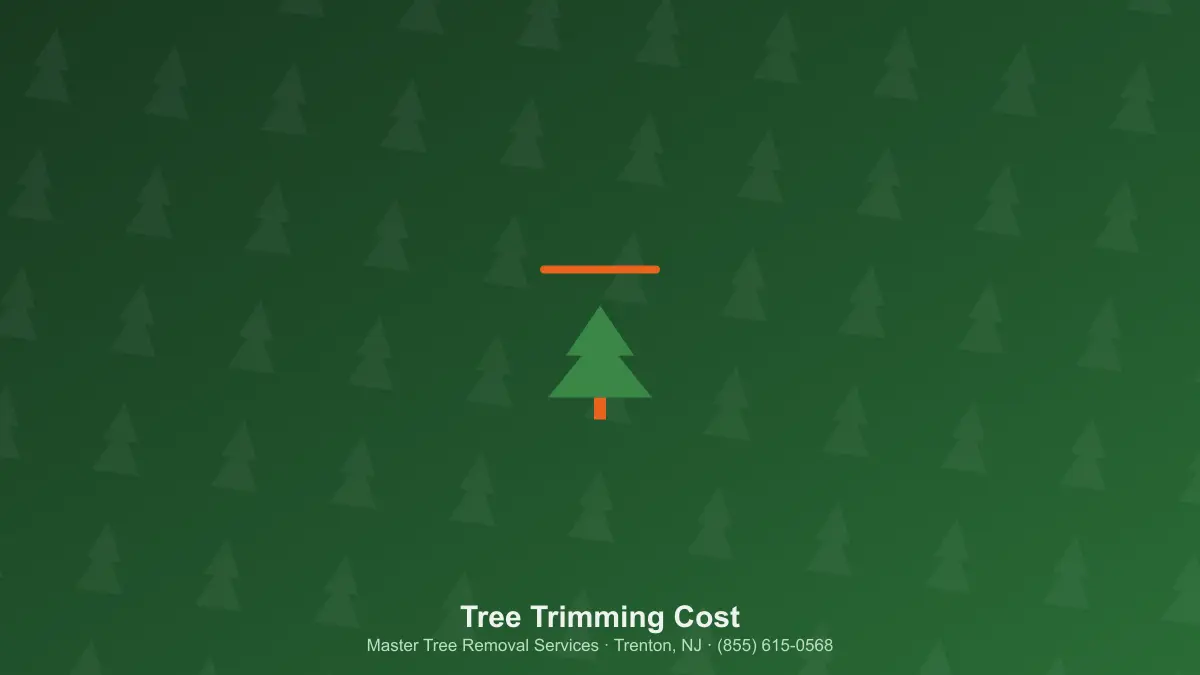
Tree trimming in New Jersey usually runs from about $240 to $720 for a routine job on a healthy, accessible tree, with larger, taller, or hard-to-reach trees costing more. As with any tree work, the real number depends on the tree — its size, condition, and how safely a crew can reach the branches that need cutting.
Because trimming and removal are priced so differently, it helps to read this alongside what full tree removal costs in central NJ and how a maintenance plan spreads pruning cost predictably over the years instead of hitting you all at once.
What Drives Tree Trimming Cost
| Factor | Why it moves the price |
|---|---|
| Tree height | Taller trees need climbing or a lift, adding time and risk |
| Canopy size & density | More limbs and more deadwood mean more cuts and cleanup |
| Access | Fenced yards, tight lots, and no room for a bucket truck slow the job |
| Proximity to wires/structures | Roped, controlled lowering near a roof or line takes longer |
| Debris volume | Hauling and chipping brush is a real line item |
Trimming vs. Removal: Why the Price Gap
Trimming is almost always cheaper than removal because the tree stays standing — there's no felling, no stump, and far less debris. But trimming is not a discount version of removal: it answers a different question (clearance, deadwood, or structure) and can't fix a tree that's actively failing. A crew that recommends a modest prune when a full removal isn't warranted is saving you money, not losing a sale.
What a Fair Trimming Quote Includes
- The specific objective — clearance, deadwood, crown reduction — named in writing
- Which limbs or areas of the canopy are in scope
- ANSI A300 pruning cuts (no topping, no stubs)
- Complete chip-up and haul-away of all brush
- Proof of liability and workers' compensation coverage
Expert Insight: When Cheap Trimming Costs You More
The cheapest quote is often the most expensive over time. "Topping" — cutting a canopy back to stubs — is quick and cheap, which is why some outfits offer it, but it triggers dense, weakly attached regrowth that becomes a bigger hazard within a few seasons and shortens the tree's life. Proper tree trimming and pruning costs a bit more up front and protects both the tree and your property. On big or wire-adjacent trees, a crew may price in rigging or a lift for safety — worth every dollar over a ladder-and-chainsaw job.
Trimming Across Trenton & Mercer County
We trim trees of every age and size from mature oaks in Princeton to young maples over a Hamilton driveway, and folding regular pruning into a residential care plan keeps the cost predictable. For a real number on your tree — not a range — call (855) 615-0568 for a free, itemized trimming estimate.
Trimming Cost by Tree Size
Size is the fastest way to ballpark a trimming job before anyone visits. Small ornamentals and young trees under about 25 feet — dogwoods, crepe myrtles, a young maple — are usually at the lower end of the range, since a crew can often work from the ground or a short ladder. Medium trees of 25 to 50 feet, the everyday oaks and maples over most Trenton-area yards, sit in the middle and typically need a climber or a bucket truck. Large and mature trees over 50 feet, or anything with a wide, heavy canopy near the house, land at the top of the range and occasionally beyond, because the height, weight, and proximity to targets all demand more time and more careful rigging.
Condition matters as much as size. A tree that has been maintained on a schedule needs a quick, light prune; one that has been neglected for a decade carries far more deadwood and structural issues, and that first "catch-up" prune costs more than the routine visits that follow.
How to Keep Trimming Affordable Without Cutting Corners
- Stay on a cycle. Regular light pruning is cheaper over time than occasional heavy ones — and a maintenance plan locks in that rhythm.
- Bundle trees. Having several trees pruned in one visit spreads the setup and travel cost across the whole job.
- Schedule in the off-season. Late winter dormancy is ideal for structural pruning and often less rushed than peak post-storm demand.
- Fix problems early. A small structural cut now prevents the big, expensive reduction — or a removal — later.
The goal is never the lowest number on paper; it's the healthiest tree for the fairest price, backed by an itemized scope you can actually compare.
Does Regular Trimming Pay for Itself?
For most homeowners, yes — in three ways. First, curb appeal: a well-shaped canopy is one of the most visible signals of a cared-for property, which matters if you ever sell. Second, health and longevity: correct pruning removes deadwood and disease before they spread and keeps the tree structurally sound, so you keep a mature shade tree for decades rather than replacing it. Third, and biggest, is risk reduction — a canopy kept clear of deadwood and heavy end-weight is far less likely to drop a limb on your roof or car in a storm, which is exactly the kind of failure that turns into an insurance claim. Weighed against the cost of an emergency removal or storm cleanup, routine trimming is cheap insurance.