Prevention & Maintenance
Pre-Winter Tree Safety Checklist for New Jersey Property Owners
By Master Tree RemovalMay 20, 20266 min read
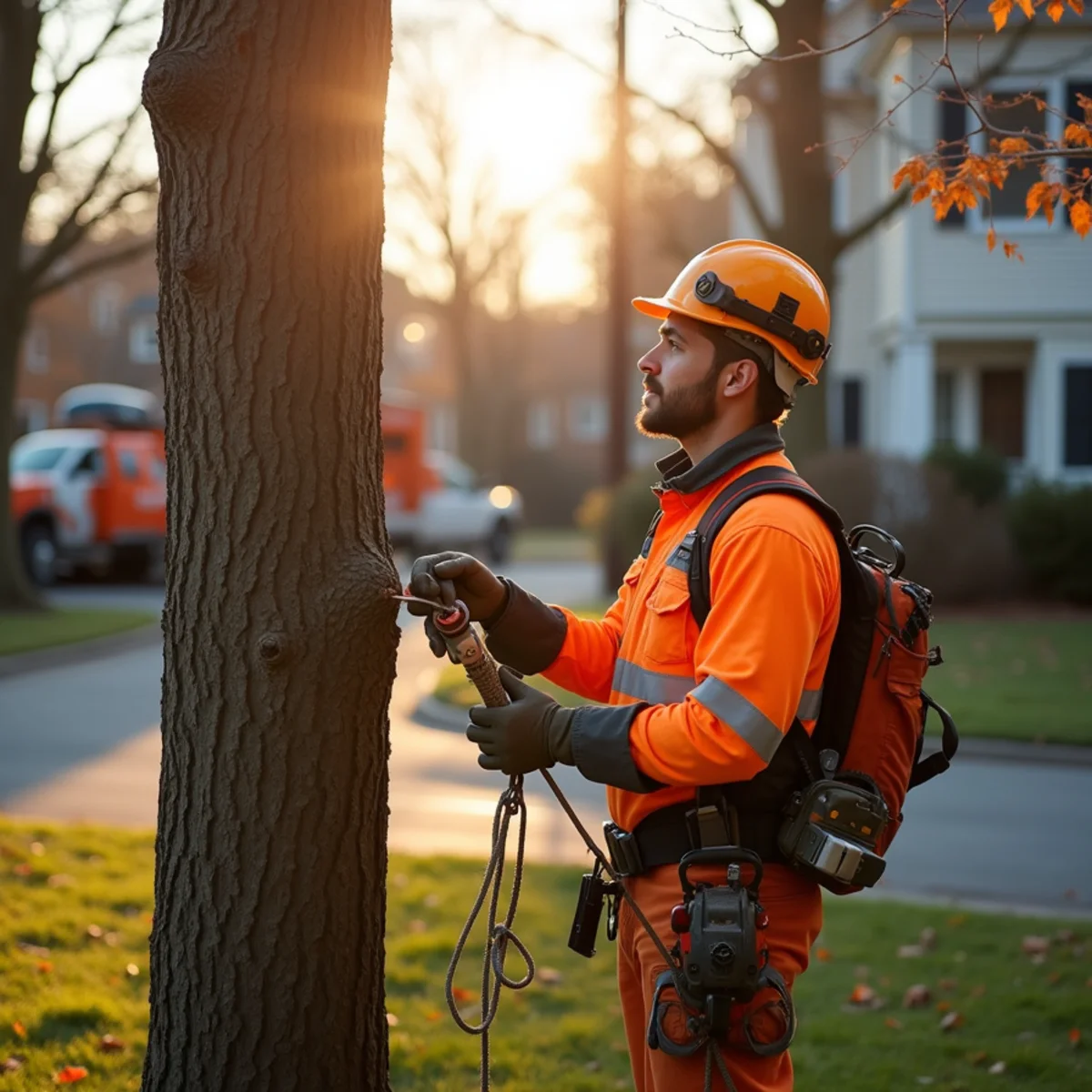
Winter storms in New Jersey find a tree’s weak points with ruthless efficiency. A pre-winter walk-through — ideally in late fall, before the first nor’easter — lets you catch the hazards that heavy snow and wind will otherwise expose the hard way.
The checklist works best as part of a year-round habit: a maintenance plan keeps it on schedule, and it's aimed squarely at the wet-snow and nor'easter damage that defines a New Jersey winter.
Walk Your Property and Look Up
Most people never look up at their trees until something falls. Spend fifteen minutes doing exactly that. Here is what to check:
- Deadwood over targets — dead limbs above the roof, driveway, cars, or walkways.
- Hanging or broken limbs left from summer storms, still lodged in the canopy.
- Cracks and seams in the trunk or major limbs.
- Leaning trees or soil lifted at the base — a sign of root movement.
- Co-dominant stems with a tight V and bark pinched between them, prone to splitting under snow load.
- Limbs on or near wires — call your utility, not us, for anything touching a line.
Prioritize by What’s Below
A dead limb over the woods can usually wait; a dead limb over the front door cannot. Rank what you find by what it would hit. Anything over a structure, vehicle, or high-traffic area should move to the top of the list.
Book Preventive Work Early
The best time to address these is before the storm, not during the rush after one. Preventive pruning to remove deadwood and reduce end-weight measurably lowers storm risk. In dense-canopy neighborhoods across Trenton and Hamilton, that head start pays off every winter.
Know Who to Call When It Hits
Even a well-prepped property can take a hit. Keep our number handy: our storm cleanup and emergency crews respond 24/7. And consider a maintenance plan, which includes seasonal inspections and priority scheduling when demand spikes.
Want a professional set of eyes before winter? Book a pre-season inspection with us.
The Pre-Winter Walk-Through Checklist
| Check | What you're looking for |
|---|---|
| Deadwood over targets | Dead limbs above roof, driveway, cars, walkways |
| Hangers | Broken limbs lodged from summer storms |
| Cracks & cavities | Seams in the trunk or major limbs |
| Lean & lifted soil | Root-plate movement |
| Weak unions | Tight V-forks with pinched bark |
| Line clearance | Limbs on or near the service drop (call the utility) |
Prioritize by What's Below
A dead limb over the woods can wait; a dead limb over the front door cannot. Rank what you find by what it would hit, and book preventive pruning before the first storm, not during the rush after one. In dense-canopy neighborhoods across Trenton and Hamilton, that head start pays off every winter. Want a professional set of eyes? Our care plans include seasonal inspections — call (855) 615-0568.
Why Late Fall Is the Right Time to Look
There's a narrow window every year when your trees are easiest to read: after the leaves drop and before the first nor'easter. Bare branches expose everything a full canopy hides — the deadwood, the cracks, the storm-broken limbs still lodged from summer, the weak forks with bark pinched inside them. Fifteen minutes with your eyes up in mid-to-late November tells you more about your winter risk than any amount of looking in July.
It's also the last cheap moment. Booking preventive pruning before the storm is scheduled, unhurried work at a normal rate. Booking it after a tree fails is an emergency call in a queue behind everyone else who waited. The homeowners across Trenton and Hamilton who walk their property each fall are the ones who aren't calling us at 2 a.m. in January.
Turning the checklist into a plan
Once you've walked the property, rank what you found by what's below it. A dead limb over the woods can wait until spring; a dead limb over the front door, the driveway, or the kids' play set goes to the top of the list. Group the urgent items and get them handled in one visit before the ground freezes hard. Anything touching or near a service drop isn't yours to touch — call the utility for that.
If you'd rather not climb the learning curve on what's actually dangerous versus what just looks rough, that's what an inspection is for. A trained eye separates the cosmetic from the hazardous, and our maintenance-plan members get that walk-through on a schedule plus priority when the storms hit. Prevention is always cheaper than recovery — and in a New Jersey winter, it's a lot safer, too.
Species and Situations That Deserve Extra Attention
Not every tree carries the same winter risk, and knowing which ones on your property warrant a closer look helps you spend your attention wisely. A few that top our list heading into a New Jersey winter:
- Bradford (callery) pears — notorious for weak, splitting unions that fail under ice and snow load.
- Silver maples and other fast, soft-wood species — prone to dropping large limbs.
- Evergreens and pines — hold heavy wet snow and can lose their tops.
- Any ash — with emerald ash borer widespread, a dead ash is a winter hazard waiting to happen.
- Trees recently exposed by construction or a neighbor's removal — suddenly facing wind they never grew up against.
Situation matters as much as species. A structurally fine tree becomes a priority the moment it's leaning over the driveway, hanging above the service drop, or growing where a failure lands on the house. And a tree that lost a major limb last winter is telling you something about the winter ahead.
The move is the same either way: identify the higher-risk trees now, prioritize the ones over targets, and get preventive pruning done before the storms rather than emergency work after. Across Trenton and Hamilton, the properties that go into winter having handled their known risks are the ones that come through it without a 2 a.m. call. If you're unsure which of your trees belong on that list, an inspection sorts it out — and our care-plan members get it on a schedule. Call (855) 615-0568.