Local Angles
Surviving Severe Atlantic Nor’easters: Why Heavy Wet Snow Snaps NJ Pine Branches
By Master Tree RemovalApril 22, 20266 min read
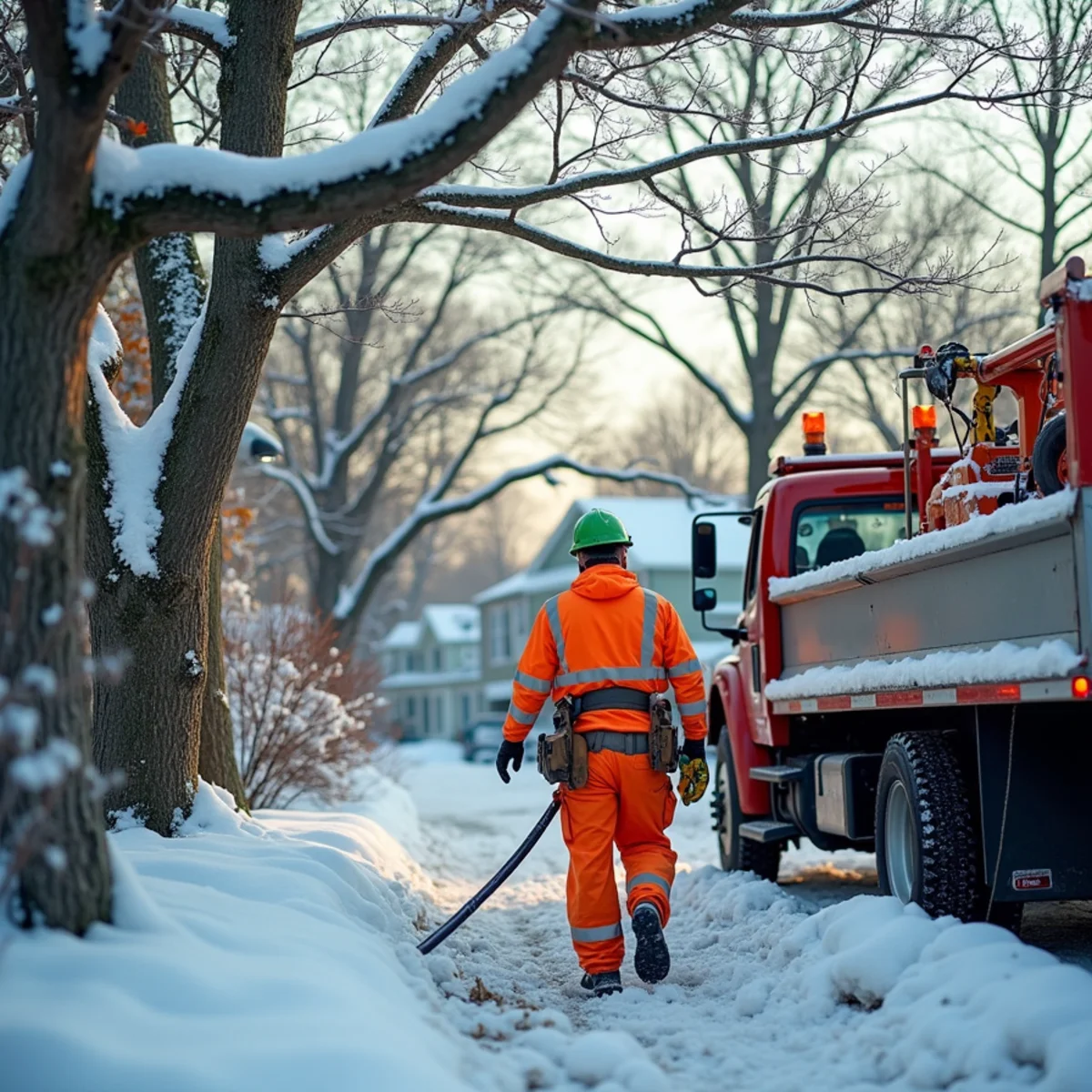
New Jersey nor’easters have a signature form of tree damage: pine and evergreen branches snapped clean off under a load of heavy, wet snow. Understanding why it happens is the first step to preventing it.
Wet-snow damage is best headed off the same way as any winter risk — with a pre-winter safety walk-through — and it's the same storm system that brings whole trees down on houses.
The Physics of Wet Snow
Dry powder blows off a branch. Wet, heavy snow clings — and it is dense. A few inches of it can load an evergreen limb with far more weight than the branch ever evolved to carry, especially on species that hold their needles through winter and present a broad surface for snow to accumulate. Add nor’easter wind, and the combination of static load and gusting force snaps branches and splits tops.
Which Trees Are Most at Risk
Pines and other evergreens are classic casualties, as are trees already carrying deadwood, end-heavy limbs, or co-dominant stems with included bark. In the sandy pine country around East Windsor’s aging windrows and the forested foothills near Hopewell, wet-snow damage is a recurring story every storm season.
Reducing the Risk Before the Storm
You cannot control the weather, but you can reduce a tree’s odds of failing. Preventive trimming and pruning removes deadwood, reduces dangerous end-weight, and thins dense canopies so wind and snow pass through rather than piling up. Structural pruning on young trees prevents the weak, co-dominant forms that fail decades later.
After the Snow Flies
If a branch does come down or hang up in the canopy, don’t try to knock it loose — a lodged limb is under unpredictable tension. Our hanging limb removal and storm cleanup crews lower it under control and clear the debris. During major storms we triage by severity, so call as soon as it is safe.
Want your evergreens ready for the next nor’easter? Schedule preventive pruning before winter.
Which Trees Fail First Under Wet Snow
- Evergreens and pines — needles hold heavy, wet snow like a sail.
- Trees carrying deadwood — brittle limbs snap under any added load.
- Co-dominant stems with included bark — a tight V-union splits under weight.
- Over-extended, end-heavy limbs — leverage does the rest.
Prevention Beats Cleanup Every Time
You can't control the weather, but you can lower the odds. Preventive pruning removes deadwood, reduces dangerous end-weight, and thins dense canopies so snow and wind pass through instead of piling up. Structural pruning on young trees prevents the weak forms that fail decades later. If a limb does come down or hang up in the canopy near Hopewell or East Windsor, don't knock it loose yourself — our hanging-limb and storm cleanup crews handle it. Call (855) 615-0568.
The Physics of a Wet-Snow Failure
Not all snow is equal to a tree. Dry powder blows off the canopy; wet, heavy snow clings and stacks, and it's dense enough that a few inches can load a branch with far more weight than it evolved to carry. Add nor'easter wind gusting against that static load, and you get the signature New Jersey failure: evergreen tops snapped clean off and hardwood limbs split at the union. The trees that fail are rarely random — they're the ones already carrying deadwood, end-heavy laterals, or weak forks that couldn't take the extra load.
Timing makes it worse. Early-season storms hit trees still holding leaves, multiplying the surface that catches snow; late storms load bare but brittle winter wood. Either way, saturated fall ground can loosen a root plate just as the canopy takes on its heaviest load of the year — the setup for a whole tree going over, not just a branch.
What actually reduces the risk
- Deadwood removal — the brittle limbs that snap first, gone before the storm.
- End-weight reduction — shortening over-extended laterals so leverage works for the tree, not against it.
- Canopy thinning — letting wind and snow pass through instead of piling up.
- Structural pruning on young trees — fixing the weak forks now that would fail in twenty years.
You can't control the weather, but preventive pruning genuinely changes the odds. And when a limb does come down or hang up near Hopewell or East Windsor, leave it to our hanging-limb and storm crews rather than a ladder and a hope.
Before and After the Storm: A Homeowner's Playbook
The work that protects your trees from a nor'easter happens on two timelines — the calm before and the cleanup after — and both matter. Ahead of the season, the highest-value moves are preventive: get the deadwood out, reduce the end-heavy limbs, and thin dense evergreen canopies so snow and wind pass through. If you have a tree with a known weak union, that's the time to address it, not during the storm.
When the storm actually hits, the rule is patience. Snow-loaded branches are brittle and under tension; shaking or beating them to knock snow off is how people get hurt and how half-broken limbs finish breaking onto whoever's below. Let the snow melt or slide on its own, and stay well clear of anything drooping over a walkway or drive. If a limb comes down across a wire, treat it as live and call the utility.
After the storm, walk the property once it's safe and take stock: hung-up limbs lodged in canopies, fresh cracks at unions, a tree leaning that wasn't before. Those are jobs for a crew, not a ladder — a lodged limb is under unpredictable load and a leaning tree may have a failing root plate. Our hanging-limb and storm cleanup crews handle exactly this across Hopewell, East Windsor, and the region, and preventive pruning beforehand means fewer of these calls in the first place. Call (855) 615-0568.