Local Angles
Managing Century-Old Heritage Oaks in Historic Princeton and Lawrenceville
By Master Tree RemovalMay 13, 20266 min read
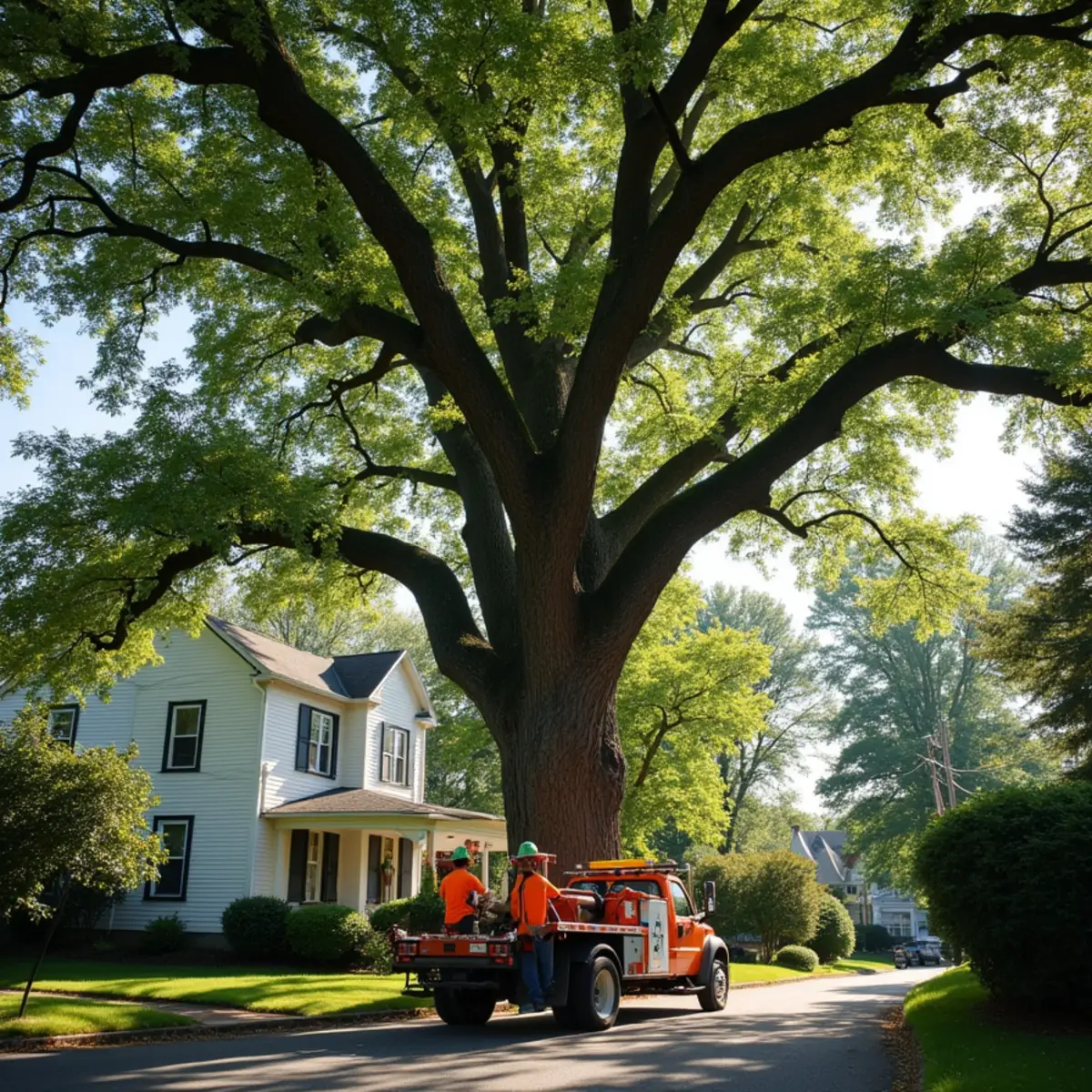
A century-old white oak is not just a tree; it is a landmark, a shade canopy, and often the defining feature of a historic property. In Princeton and Lawrenceville, these heritage giants deserve care that preserves them — not the blunt approach that shortens their lives.
Preserving an old oak usually means reaching for support before the saw — cabling and bracing a weak union — and keeping the tree on a maintenance plan that catches decline early.
Preservation First
The instinct with a big old tree that drops a limb is sometimes to remove it. But many heritage oaks have decades left in them with the right care. Our approach on Princeton and Lawrence Township estates is preservation first — assess the tree honestly, and reach for removal only when structure and safety genuinely require it.
Pruning an Old Oak Correctly
Heritage trees are pruned lightly and precisely. We remove deadwood, reduce dangerous end-weight, and make proper reduction cuts — never topping, which triggers weak regrowth and open wounds that a mature oak cannot easily seal. Good pruning respects the tree’s natural form and its ability to compartmentalize wounds.
Cabling and Bracing
Old oaks often develop co-dominant stems or heavy horizontal limbs that a support system can protect. A well-placed cable or brace can save a tree that would otherwise split, buying years of safe life. It is a preservation tool, not a cure-all — the assessment defines its limits.
Watching for Decline
Age brings decay, cavities, and root-zone stress, especially where construction or grade changes have disturbed a root system. An annual inspection under a tree care plan catches these signs early. When a heritage tree does reach the end of its safe life, careful removal — often with a crane on tight historic lots — protects the surrounding property.
Respecting the Rules
Princeton’s ordinances protect many specimen trees, so we verify requirements before any significant work. Documented, standards-based care also serves the historic character these communities value.
Have a grand old oak you want to keep for the next generation? Let’s put it on a care plan.
A Care Calendar for Century-Old Oaks
| When | Task |
|---|---|
| Dormant season | Structural and deadwood pruning; avoid oak-wilt risk windows |
| Growing season | Monitor for stress, cabling inspection, soil/root-zone check |
| After storms | Assess for cracks, hangers, and root-plate movement |
A key rule for oaks: avoid pruning during the active oak-wilt window when practical, since fresh wounds can attract the beetles that spread the disease. We time heritage-oak work accordingly as part of our pruning and care plans.
Preservation Tools Before Removal
An old oak with a weak union or a heavy horizontal limb often doesn't need to come down — a cable or brace can share the load and buy years. We reach for removal only when structure and safety require it. On the estates of Princeton and historic Lawrence, that preservation-first approach keeps landmark trees standing. Call (855) 615-0568 to put yours on a plan.
The Slow-Growing Threats to an Old Oak
A century-old oak rarely dies from one dramatic event. It declines from an accumulation of stresses, most of them slow and many of them our own doing. Construction is the biggest culprit — grade changes, trenching through the root zone, and soil compaction from equipment can sever a mature oak's feeder roots and slowly starve a tree that looks healthy for years afterward. On the estate properties of Princeton and Lawrence, we often see decline that traces back to a driveway or addition installed a decade earlier.
Disease and pests add to the list. Oak wilt is the one that drives our pruning calendar: because the beetles that spread it are drawn to fresh wounds during the growing season, we time significant oak pruning to the dormant months whenever practical. Bacterial leaf scorch, borers, and root-rot fungi all move slowly enough that early detection through regular inspection is the difference between managing a problem and losing the tree.
A preservation-first playbook
- Protect the root zone — no compaction, grade changes, or trenching inside the critical root area.
- Prune lightly and correctly — small, well-placed cuts an old tree can seal, timed around oak-wilt risk.
- Support weak structure — a cable or brace instead of removal when a union is the only problem.
- Monitor on a schedule — annual checks catch decline while it's still reversible.
Removal is the last resort, not the default. Our pruning and care plans are built to keep these landmark trees standing for the next generation, not to cut them down at the first defect.
Why an Old Oak Is Worth the Extra Care
It's fair to ask why a heritage oak justifies the attention — and the answer is that you cannot buy back what it provides. A mature oak's canopy shades and cools a home in ways a newly planted tree won't match for decades, and its presence is often what gives a historic Princeton or Lawrence property its character and value. Removing one and starting over isn't a like-for-like swap; it's trading a century of growth for a sapling and a very long wait.
That's the whole logic behind preservation-first care. The investment in correct pruning, root-zone protection, and the occasional support cable is small next to the cost — financial and otherwise — of losing the tree. And most of what threatens an old oak is manageable if it's caught early: the construction damage, the slow decline, the weak union that a timely brace can hold. What kills these trees is usually neglect punctuated by a single bad decision, like a hard "topping" cut or a driveway poured over the roots.
Our approach is to treat a heritage oak as the long-term asset it is: light, correct pruning timed around oak-wilt risk, structural support where a defect warrants it instead of removal, and annual monitoring through a care plan so problems get caught while they're still small. Removal stays the last resort, reserved for when safety genuinely requires it. Have a landmark oak you want kept for the next generation? Call (855) 615-0568.