Prevention & Maintenance
Cabling and Bracing Split-Trunk Trees: Saving Historic Shade Trees from Removal
By Master Tree RemovalJune 10, 20266 min read
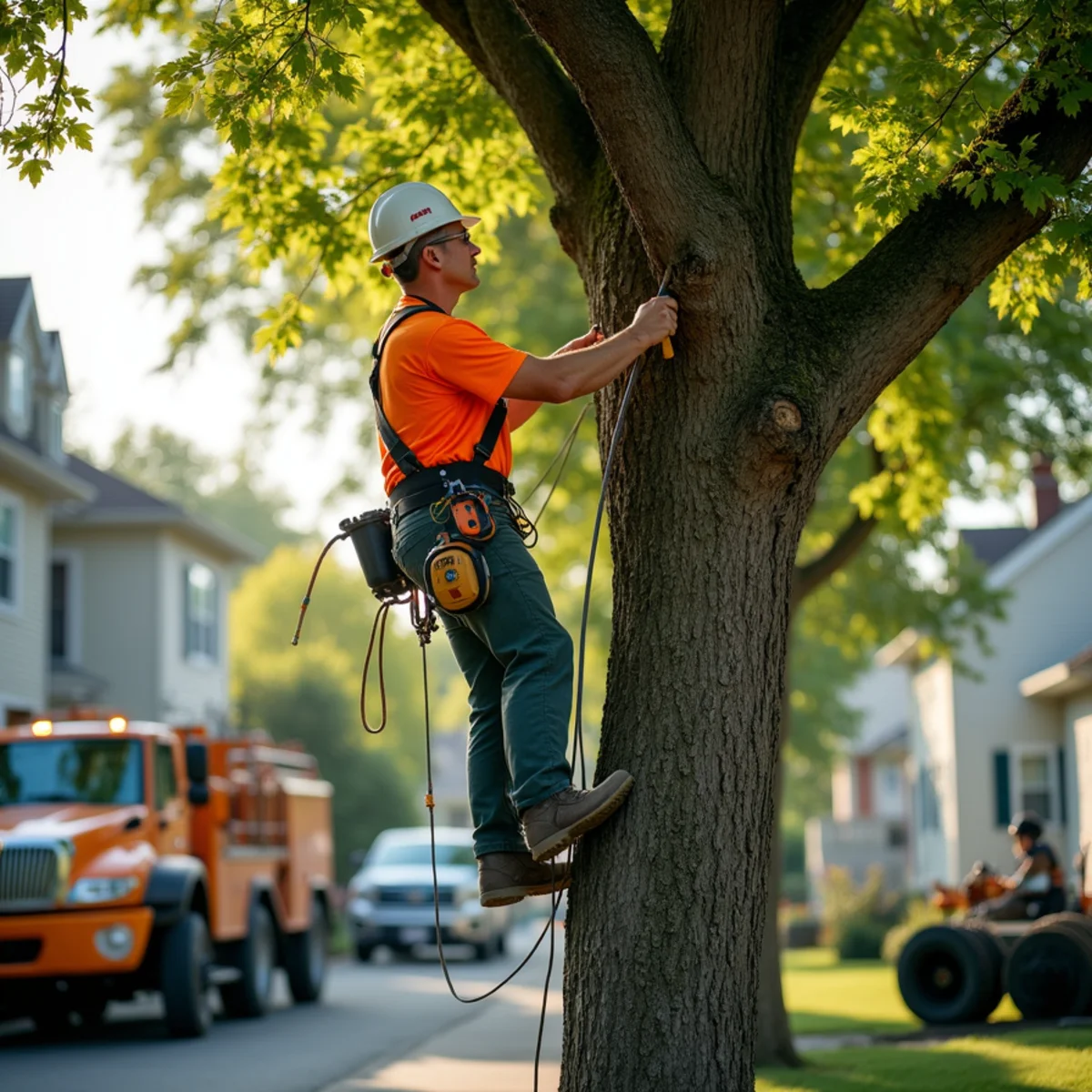
Not every structurally flawed tree has to come down. A large shade tree with a splitting trunk or a heavy horizontal limb can often be saved with a support system — cabling or bracing — that reduces the stress on the weak point and buys years of safe life. For heritage trees, that can be the difference between preservation and loss.
Support systems matter most on the trees worth saving — the century-old heritage oaks of the region — and they belong on a maintenance plan so the hardware is inspected as the tree grows.
What Cabling and Bracing Do
Cabling installs flexible steel cables high in the canopy to limit how far weak stems can move in wind, sharing the load between them. Bracing uses threaded rods to reinforce a specific split or weak union directly. Both are supplemental support — they reduce risk of failure at a known weak point, they do not make a tree indestructible.
When It’s the Right Tool
Support systems fit trees that are otherwise healthy and worth preserving but carry a structural defect: co-dominant stems with included bark, a developing crack, or a heavy limb with a weak attachment. On the close-set historic lots of Pennington and the estate grounds of Princeton, saving a mature tree preserves both the property’s character and its shade.
When It’s Not Enough
Cabling cannot rescue a tree with advanced decay, extensive root loss, or a defect too severe to support. An honest assessment states the limits and the conditions that would still require removal. We would rather tell you a cable will only postpone the inevitable than sell you one that gives false confidence.
Installation and Follow-Up
Support systems are installed to arboricultural standards and need periodic inspection — cables and hardware must be checked as the tree grows. That is why cabled trees belong on a maintenance plan, paired with the light structural pruning that reduces load on the supported union.
Have a splitting shade tree you’d rather save than lose? Ask us whether cabling is an option.
Cabling vs. Bracing — Two Different Tools
- Cabling installs flexible steel cables high in the canopy to limit how far weak stems can move in wind, sharing the load between them.
- Bracing uses threaded rods to reinforce a specific split or weak union directly.
Both are supplemental support — they reduce the risk of failure at a known weak point; they don't make a tree indestructible.
When Support Works — and When It Doesn't
A cable or brace fits a healthy, worth-keeping tree with a structural defect: co-dominant stems, a developing crack, or a heavy limb with a weak attachment. It won't rescue a tree with advanced decay or major root loss — an honest assessment states the limits, and sometimes removal is the safer answer. Support systems also need periodic inspection as the tree grows, which is why cabled trees belong on a maintenance plan alongside light pruning. Have a splitting shade tree in Pennington you'd rather save? Call (855) 615-0568.
How a Support System Is Designed and Installed
A cable isn't a clothesline strung between two limbs — it's an engineered system, and doing it wrong is worse than doing nothing. Placement is everything: a dynamic cable is installed high in the canopy, typically around two-thirds of the way up the leaders it's supporting, so it limits how far those leaders can move in wind while still letting the tree flex naturally. Set it too low or too tight and you concentrate stress in a new spot; set it correctly and you take the peak load off a weak union without turning the tree rigid.
Bracing is the complement to cabling. Where a cable limits movement from above, a brace rod runs directly through a split or weak fork to hold it mechanically. The two are often used together on a valuable tree with a serious defect — the rod reinforces the union, the cable reduces the leverage that would reopen it. Both belong to a broader assessment: they're tools to preserve a tree that's otherwise sound, not patches for one that's failing.
The honest limits
Support systems don't make a tree safe forever, and any arborist who implies otherwise is overselling. Hardware has to be inspected periodically as the tree grows and loads change, which is why cabled trees belong on a maintenance plan. And a cable can't rescue a tree with advanced decay, extensive root loss, or a defect too far gone — in those cases removal is the safer call, and we'll say so plainly. Where preservation is realistic, though, a well-designed system can buy a heritage shade tree in Pennington many more good years, paired with the light structural pruning that reduces load on the supported union.
Which Trees Are Good Candidates — and Which Aren't
Support systems are a targeted tool, not a universal fix, and matching them to the right tree is most of the job. The strong candidates share a profile: a structurally significant defect in an otherwise healthy, valuable tree. Classic examples are a co-dominant trunk with included bark that's likely to split, a heavy horizontal limb with a weak attachment overhanging a target, or a mature specimen with a developing crack that hasn't yet failed. In each case the tree is worth keeping and the defect is localized — exactly what a cable or brace is designed to manage.
The poor candidates are just as clear. A tree with advanced internal decay, significant root loss, or a defect so far progressed that failure is imminent isn't a cabling job — it's a removal, and installing hardware would only offer false confidence. Support systems reduce risk at a known point; they can't rebuild wood that's already gone or re-anchor a failing root plate. An honest assessment says so.
The decision also isn't permanent-and-forget. A supported tree needs periodic inspection as it grows and as loads change, which is why we put cabled trees on a maintenance schedule and pair the hardware with light structural pruning to reduce the load the system carries. Done right, on the right tree, it can preserve a heritage shade tree in Pennington for many more years. Wondering whether yours is a candidate? Call (855) 615-0568 for a straight assessment.