Commercial
HOA Tree Care Standards: Managing Shared Forest Hazards and Buffer Zones in NJ
By Master Tree RemovalJuly 8, 20266 min read
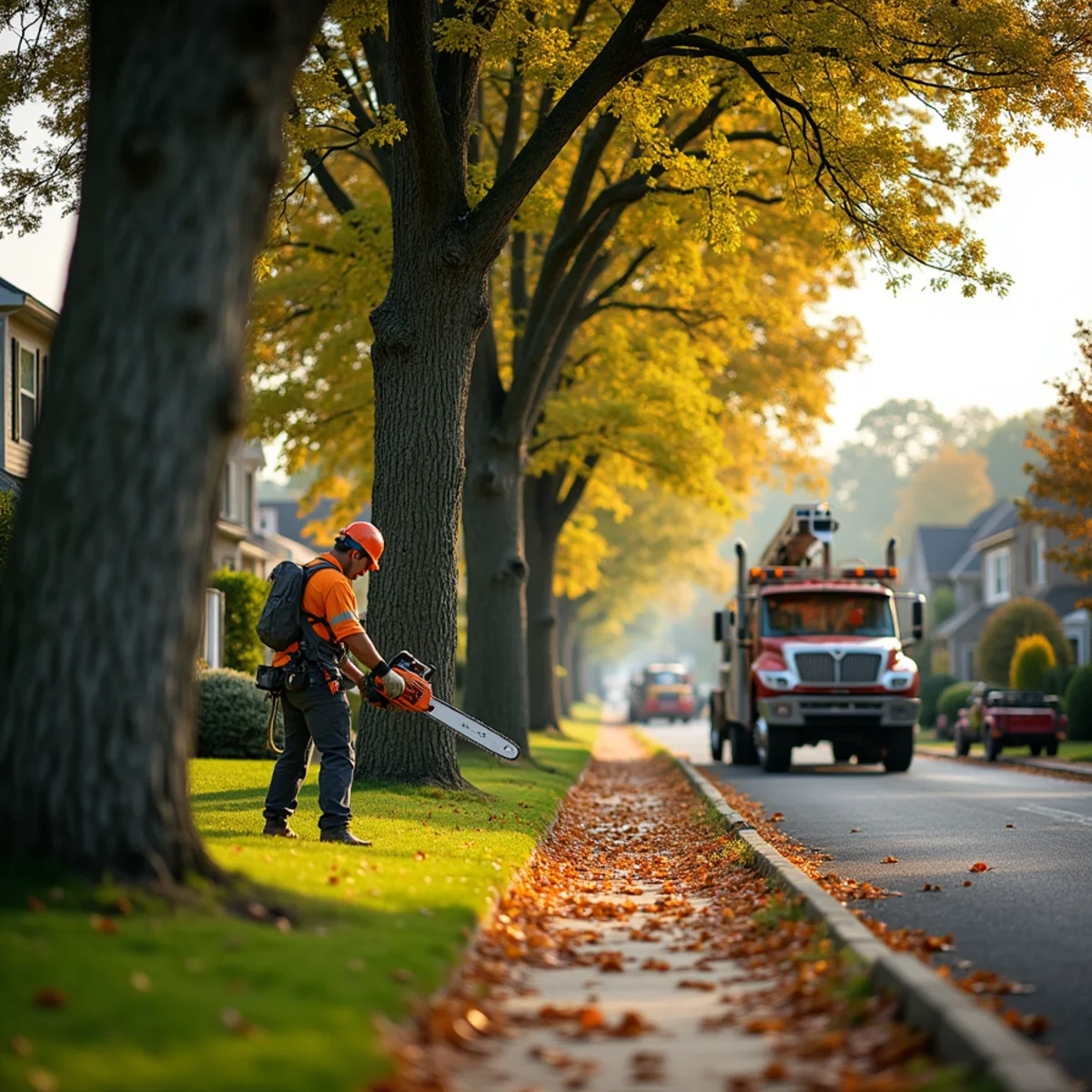
In an HOA community, the biggest trees are often on shared common ground — buffer strips, retention-pond edges, wooded perimeters, and entry landscaping. That shared ownership makes tree care a governance question: whose responsibility, whose budget, and whose liability when a limb comes down? Clear standards keep it from becoming a dispute.
The governance and liability side mirrors what any commercial property manager faces, and the seasonal reality that drives most emergency calls — nor'easter and wet-snow failures.
Know What the Association Owns
Start by mapping which trees are common-area responsibility versus individual-lot. Buffer zones between the community and a road or neighbor, perimeter woodlands, and pond-side plantings are typically the association’s to maintain. A documented inventory of these trees is the foundation of a sound program.
Set Maintenance Standards
The strongest associations adopt written standards: a regular inspection cycle, clear thresholds for when a tree is pruned or removed, and a process for owner requests. Our commercial and HOA management provides scheduled maintenance and documented hazard audits that fit neatly into these standards. In active-adult communities like Monroe Township and estate-lined Moorestown, that structure keeps mature perimeter trees safe and the community looking its best.
Buffer Zones and Shared Woodlands
Wooded buffers are prized for privacy but breed hazards out of sight — deadwood, leaning trees, invasive growth. A perimeter that is never inspected is exactly where the storm-season failure happens. Periodic audits and selective clearing keep buffers healthy without stripping the screening residents value.
Storm Response and Documentation
When a storm hits, an HOA needs fast, coordinated response and clean records for insurance and owner communication. Our storm cleanup crews clear common areas quickly, and we document the work for the board. For individual owners, we also offer residential care plans so lot trees don’t fall through the cracks.
On an HOA board? Let’s build a tree management program your community can budget and stand behind.
Who Owns Which Tree?
| Location | Usually the association's |
|---|---|
| Common-area & entry landscaping | Yes |
| Perimeter buffers and shared woodlands | Yes |
| Retention-pond plantings | Yes |
| Trees on individual lots | Typically the owner's |
Mapping this first prevents the disputes that stall tree work in a community.
Standards, Budgeting, and Buffers
Strong associations adopt written standards — an inspection cycle, clear thresholds for pruning vs. removal, and a process for owner requests — and fund them in the reserve study so a storm year doesn't blow the budget. Wooded buffers are prized for privacy but breed out-of-sight hazards; periodic audits and selective clearing keep them healthy without stripping the screening. Our HOA and commercial management provides scheduled service and documented audits across communities like Moorestown and Monroe. On a board? Call (855) 615-0568.
Turning Shared Trees Into a Managed Asset
In an HOA, the biggest trees usually stand on shared ground — entry landscaping, perimeter buffers, retention-pond edges, common woodlands — and shared ownership is where tree care turns into a governance problem. Whose budget, whose responsibility, whose liability when a limb comes down over a shared drive? Communities that answer those questions in writing, before a storm forces the issue, avoid the disputes that otherwise stall every decision.
It starts with a clear inventory of what the association owns versus what falls to individual lots, and a written standard for how those common trees are maintained: an inspection cycle, thresholds for when a tree is pruned versus removed, and a process for handling owner requests and complaints. That standard is what lets a board act consistently instead of reacting to whoever emails loudest.
Budgeting and the buffer problem
Two issues sink HOA tree programs. The first is budgeting: tree care belongs in the reserve study as predictable scheduled maintenance plus a storm contingency, not as a surprise special assessment after a bad winter. Deferring pruning until failure is what actually blows budgets. The second is the wooded buffer — prized for privacy, but out of sight and therefore out of mind, quietly accumulating deadwood, leaning stems, and invasive growth until a failure over the property line forces attention. Periodic audits and selective clearing keep buffers healthy without stripping the screening residents value. Our HOA and commercial management handles the inventory, the scheduled work, and the documentation for communities like Moorestown and Monroe — one accountable crew, records on file for the board.
Communicating Tree Decisions to Residents
Half of HOA tree management is arboriculture; the other half is communication, and boards that skip the second half end up fighting the first. Tree work is emotional for residents — someone loves the shade of a common-area maple that the arborist has flagged as a hazard, and a removal that shows up with no warning becomes a governance fight. The fix is transparency: share the standard, explain the why, and give notice before major work.
A few practices smooth this considerably. Publish the maintenance standard so residents know there's a consistent process rather than arbitrary decisions. When a significant removal is planned, communicate the reason — ideally with the arborist's finding — before the crew arrives, not after the stump is ground. And create a simple channel for residents to report concerns, so a leaning tree over a walkway reaches the board before it reaches someone's windshield.
Documentation serves double duty here: the same hazard audit that protects the association legally also explains decisions to residents and to the reserve study. When a homeowner asks why a beloved tree came down, "here's the dated assessment that found advanced decay" ends the conversation that "the board decided" would only start. Our HOA and commercial management provides that documentation as standard, alongside scheduled service and priority storm response, for communities like Moorestown and Monroe. On a board and tired of tree fights? Call (855) 615-0568.